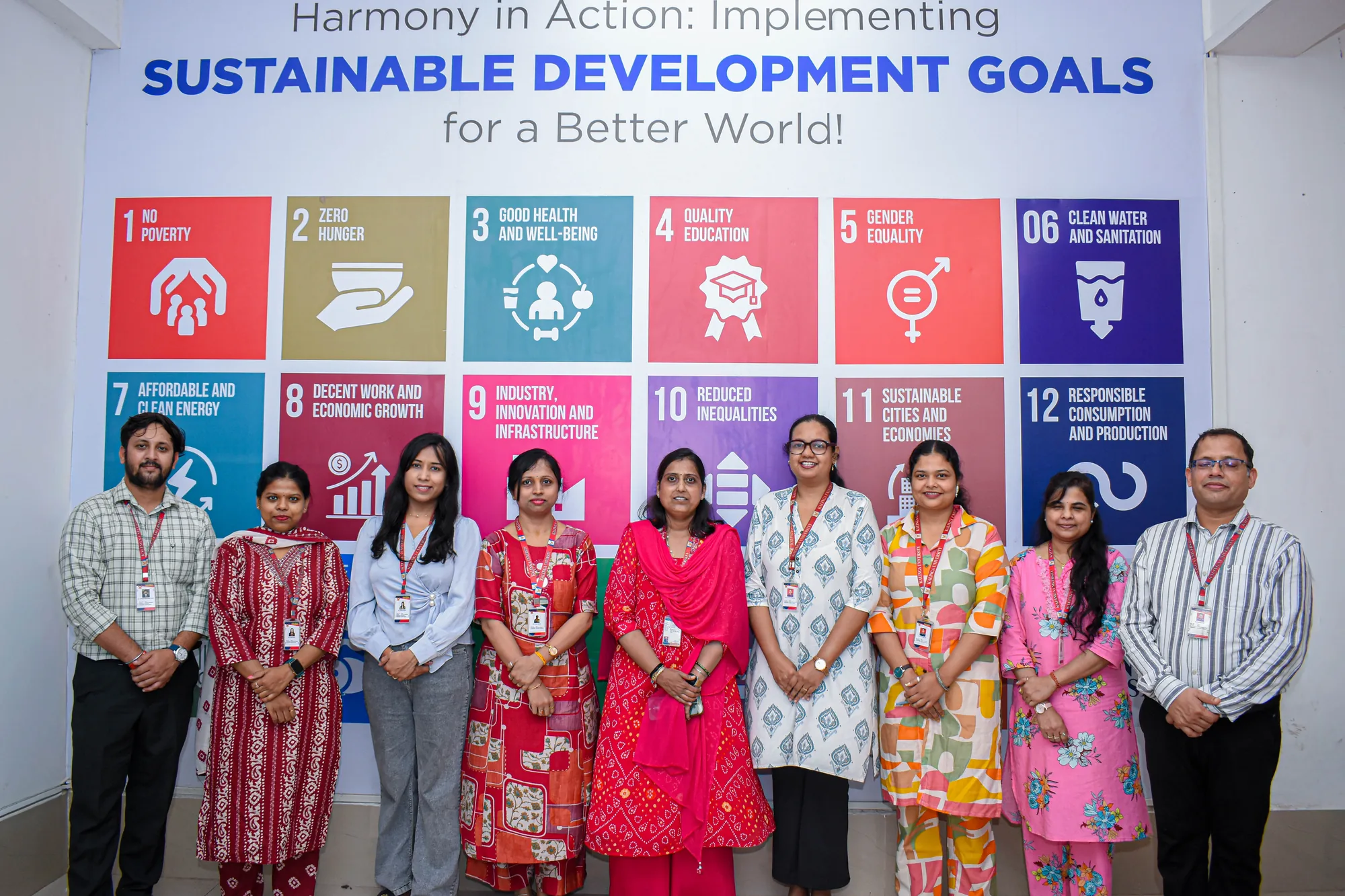
SDG 12: Responsible Consumption and Production Report

Loading
Admissions Closing Soon for 2026-27
Apply NowKalinga University, Naya Raipur, India, is committed to advancing United Nations Sustainable Development Goal (SDG) 12: Responsible Consumption and Production by integrating sustainability into its academic programmes, research, institutional practices, innovation, and community engagement. The University promotes responsible resource utilization, waste reduction, sustainable production systems, and environmental stewardship through a multidisciplinary approach involving the Faculties of Arts & Humanities, Law, Science, Education, Pharmacy, Technology, Commerce & Management, and Computer Science & Information Technology.

SDG 12 Related Publications (2024-25)
Cumulative SDG 12 Related Publications
Field-Weighted Citation Impact (FWCI)
Citation Count
The University's research findings are published in reputable national and international journals and conferences, books, and book chapters highlighting research topics on sustainable production and consumption, recycling, pollution control, circular economy, biodegradable materials, waste water treatment, renewable energy and sustainable industrialization.
Kalinga University demonstrates a strong commitment to Sustainable Development Goal 12 (Responsible Consumption and Production) through its research contributions addressing sustainable resource utilization, waste management, environmental protection, and responsible production practices. A total of 140 research documents is specifically aligned with SDG 12. These publications reflecting their academic visibility and contribution to the global knowledge base. These outcomes highlight Kalinga University’s continued efforts to promote research and innovation supporting sustainable consumption, efficient resource management, circular economy practices, and environmentally responsible development.
The University's SDG 12-aligned research demonstrates strong academic impact, with 140 publications receiving 334 citations. This citation performance reflects the University's growing contribution to responsible consumption and production through research on sustainable resource management, waste reduction, environmental sustainability, circular economy practices, and efficient utilization of natural resources. The research outcomes highlight the quality, relevance, and scholarly recognition of the University's contributions toward promoting sustainable production systems and responsible consumption practices. Between 2024 and 2026, the University published 96 Scopus-indexed research papers which is directly contributed to SDG 12-related themes.
Kalinga University has demonstrated significant progress in advancing research aligned with Sustainable Development Goal 12. Between 2024 and 2026, the University published Scopus-indexed research papers, of which 140 publications directly contributed to SDG 12-related themes, including public health, healthcare innovation, biomedical sciences, mental health, and well-being. This sustained commitment to health-focused research strengthens Kalinga University's role in generating evidence-based knowledge, supporting healthcare advancements, and contributing to the achievement of SDG 12 at regional, national, and global levels.
| Years | SDG-12 Aligned Research papers |
|---|---|
| 2021 | 1 |
| 2022 | 1 |
| 2023 | 7 |
| 2024 | 2 |
| 2025 | 74 |

Kalinga University has instituted policies and practices that promote Responsible Consumption and Production (SDG 12). The University buys responsibly, ensures proper waste disposal, manages e-waste and biomedical waste appropriately, conserves resources, and reduces single-use plastics in the campus. It also requires the sub-contractors such as houses keeping, canteens, lawn care, and other agencies to meet sustainability criteria. In addition, sustainability is promoted in the procurement process by ensuring they acquire products and services that conserve natural resources, reduce waste, and promote recycling and reuse whenever possible. Besides developing and implementing standard operating procedures and policies to promote responsible consumption and production, the University conducts frequent sensitization, promotes monitoring, and evaluates its policies periodically. Policies, guidelines, and other relevant information are available in the reports and communications, thus making it easy to track progress toward achieving SDG 12: Responsible Consumption and Production.


Establishment of BIS standard club for students at Kalinga University
The University has an Ethical Sourcing Policy relating to food waste minimization during production, storage, and transportation; water conservation; and other resources. The policy also addresses such matters as ethical sourcing, workers’ safety and general sustainability and is applied to all areas and departments of the University and its affiliates, prioritizing local sustainable production and minimising waste during any stage of production.


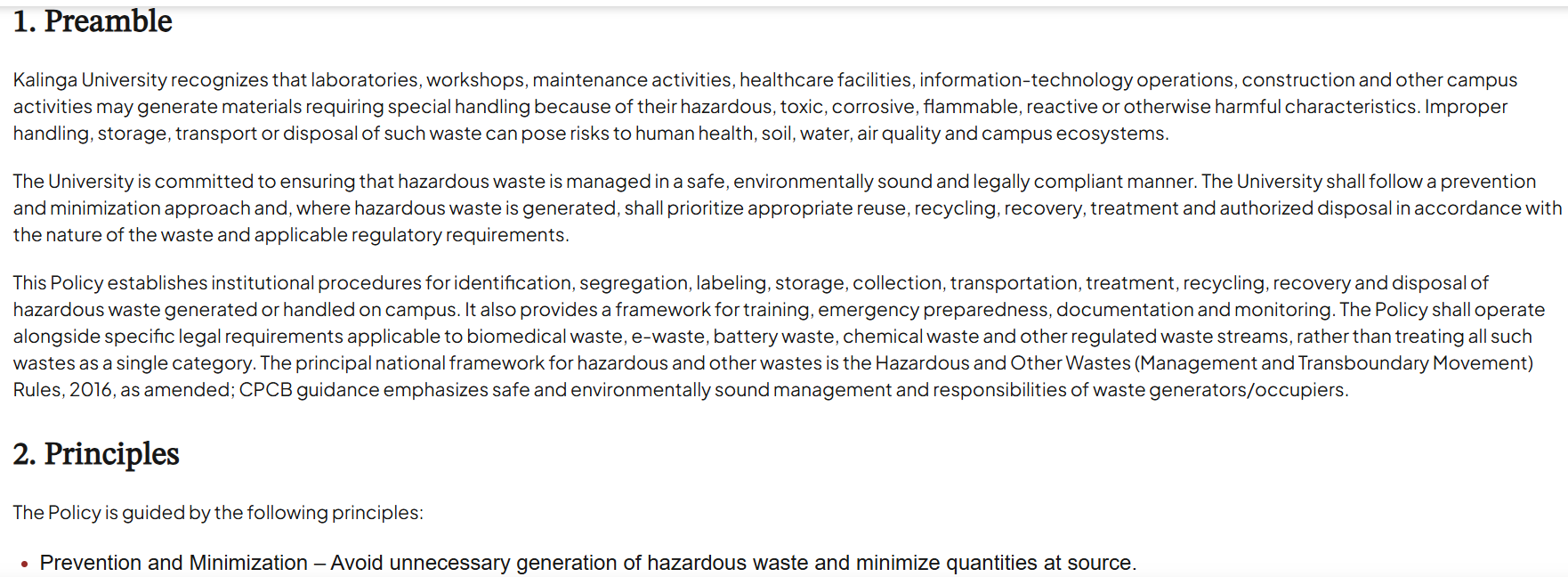
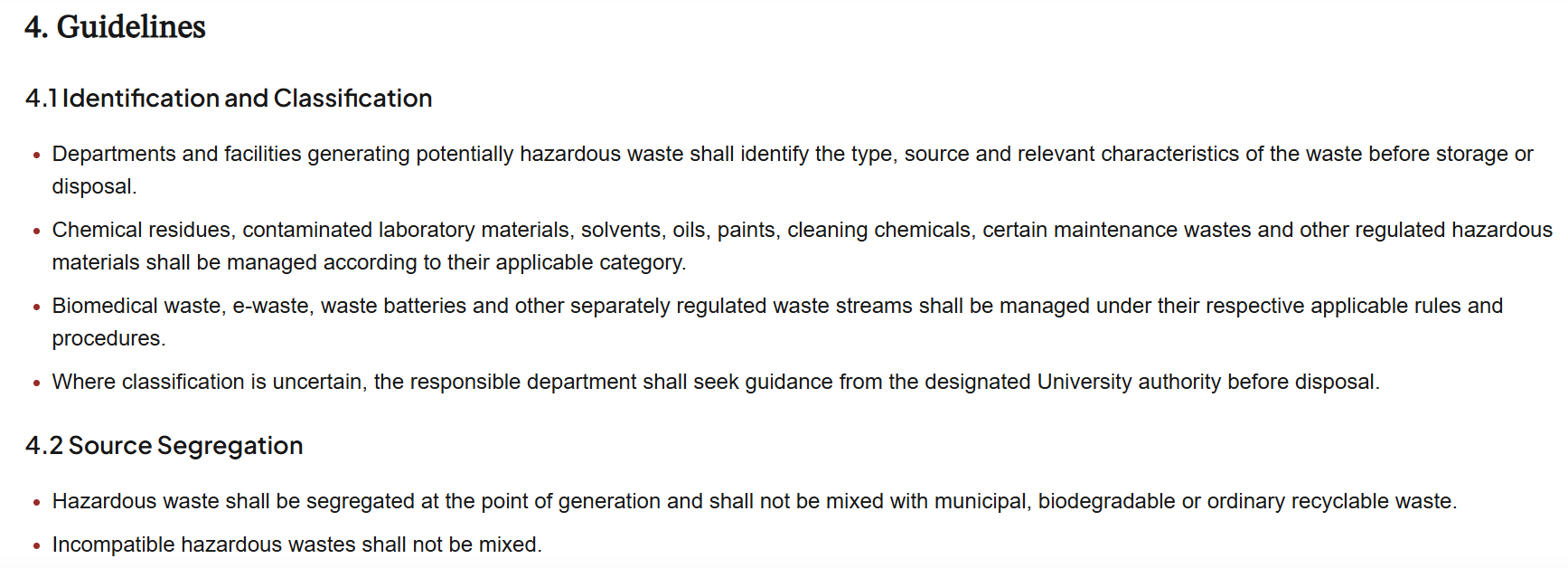
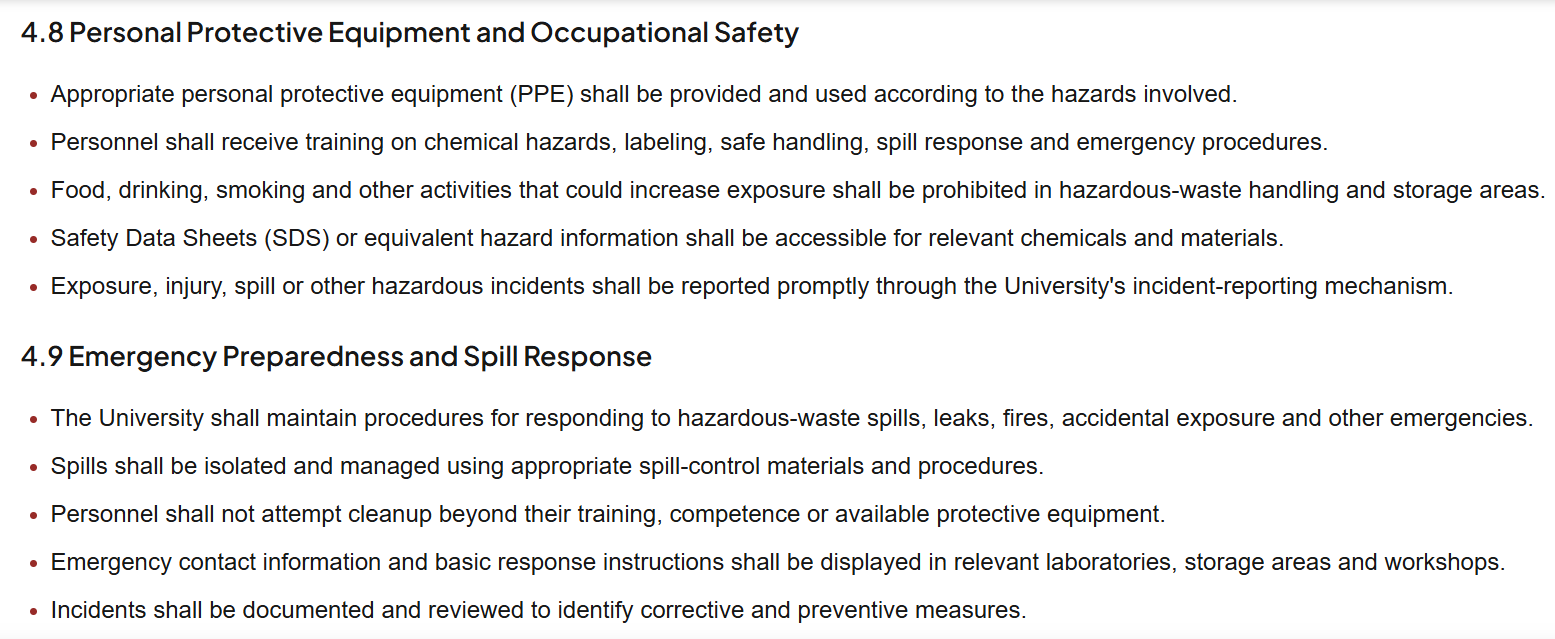
Kalinga University follows responsible waste management practices through established guidelines for the safe handling, segregation, storage, and disposal of hazardous materials generated from laboratories, research activities, and other institutional operations. The University emphasizes minimizing environmental risks by ensuring proper collection of chemical, biomedical, and hazardous wastes through authorized disposal mechanisms in compliance with applicable environmental regulations. Awareness programmes and training sessions are conducted to promote safe waste-handling practices among students, faculty members, and laboratory personnel. These initiatives reflect the University’s commitment to sustainable resource management, environmental protection, and achieving Sustainable Development Goals through responsible consumption and pollution prevention.







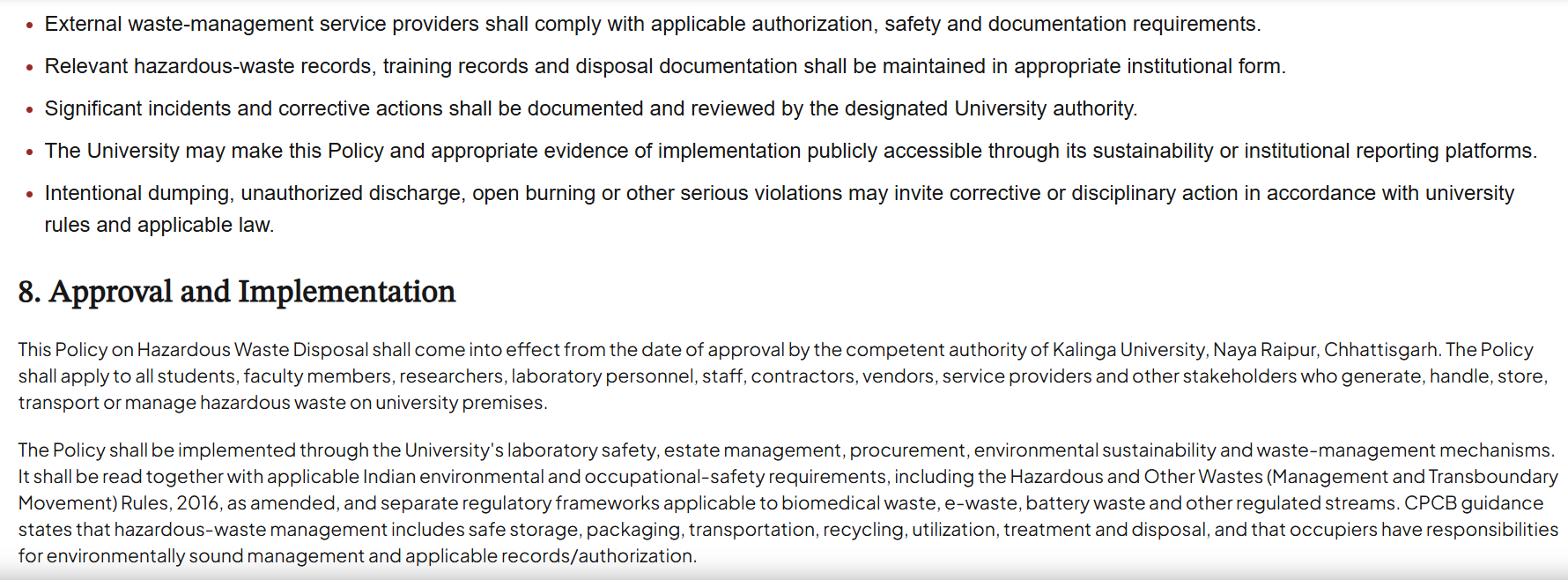
Solid Waste Management
The University has established a well-structured, solid waste management system by partnering with authorised vendors who regularly collect garbage and paper waste from various collection points. These are strategically located with proper colour coding, like green for biodegradable waste, blue for recyclable waste, and yellow for other waste categories, ensuring systematic segregation of wastes. We strongly encourage everyone on the campus to use minimal plastic and promote the usage of eco-friendly products, such as paper cups and paper bags, to maintain a plastic-free campus environment.
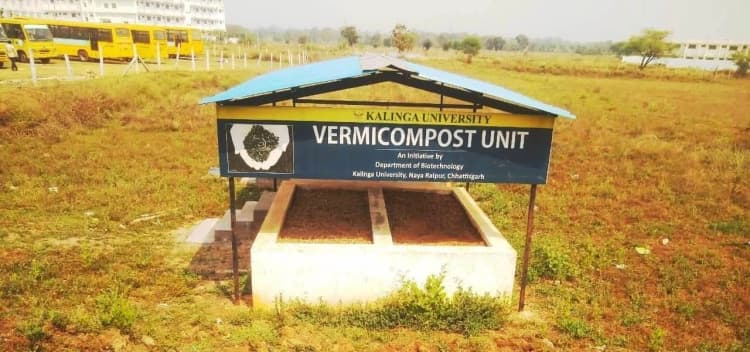
Liquid Waste Management
• To ensure 100% utilisation of liquid waste on the campus, the University operates a Sewage Treatment Plant (STP) to treat wastewater for gardening and landscaping purposes.
• Greywater, collected from wash basins and hostel rooms, is collected in storage tanks and used for irrigation purposes. • Low-flush cisterns and water-saving taps with controlled flow systems are installed in washrooms. • To support water conservation, the campus has rainwater harvesting tanks with sufficient storage capacity.• Plantation drives conducted under the National Mission on Clean and Green Environment are monitored annually by NSS.
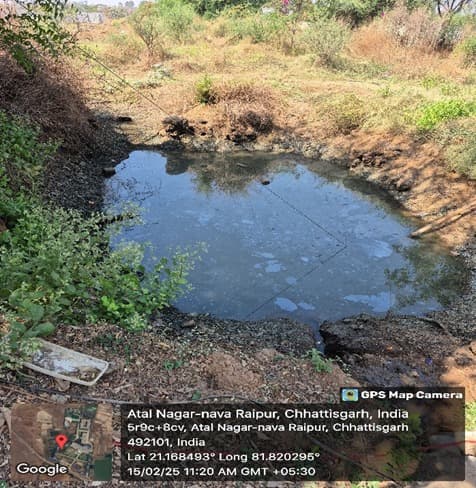
Kalinga University practices effective solid waste management through source-level segregation using color-coded bins installed across the campus. Housekeeping staff ensure daily collection and safe transportation of waste to designated processing areas. Organic waste is converted into compost for campus landscaping, while recyclable materials are handed over to authorized recycling agencies, promoting sustainable waste management.
Waste Management
To ensure a clean, sustainable, and environmentally responsible campus, Kalinga University follows a systematic approach towards waste management. The University manages different types of waste, such as solid, liquid, electronic, and biomedical waste, promoting recycling practices among students and staff members. These efforts align with the United Nations Sustainable Development Goals, specifically SDG 6 (Clean Water and Sanitation), SDG 11 (Sustainable Cities and Communities), SDG 12 (Responsible Consumption and Production), and SDG 13 (Climate Action).
Waste Recycling System
The faculty, staff, and students actively participate in the recycling initiatives, such as the segregation of recyclable and non-recyclable waste materials by dumping them carefully in different labelled bins.Continuous awareness programs are conducted to encourage active participation in recycling activities across the campus to reduce waste generation.

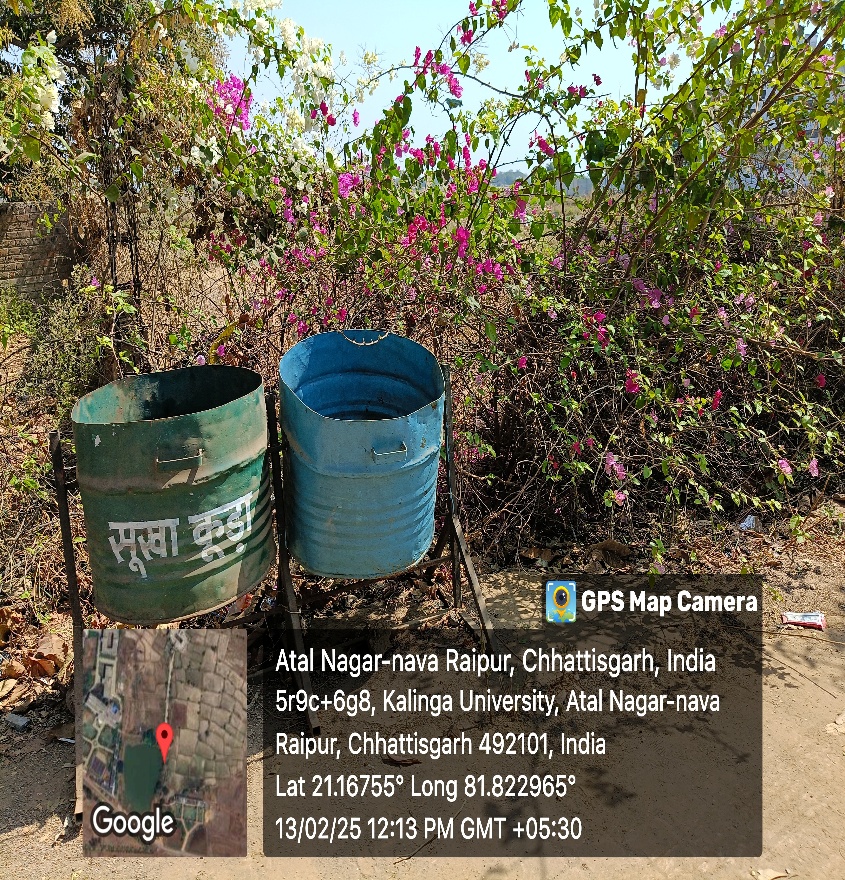

Biomedical Waste Management
Biomedical waste generated from the University’s animal house and medical room is segregated at the point of origin to ensure safe handling and proper disposal. The waste is placed in colour-coded and labelled containers under different categories, such as infectious waste, sharps, and non-infectious materials. It prevents cross-contamination and ensures compliance with biomedical waste management regulations. The process is monitored every day by trained personnel to maintain strict hygiene standards. The collected waste is transported by authorised agencies for further treatment.

E-Waste Management
The University has a standard operating procedure for the proper disposal of hazardous laboratory and electronic waste. Thus ensuring that it is handled in a safe and legal manner.
It is the responsibility of all departments to bring all obsolete, non-usable electronic devices including computer monitors, keyboards, printers, batteries, and cables, among other lab equipment to the E-Waste Store. This is done by following all the safety procedures when dealing with such waste, while classifying and storing them temporarily for disposal.
In addition, the disposal process is done by certified and licensed waste management organizations. This implies that the E-waste collected is sold to private firms that deal with recycling and reprocessing of the waste in a more scientific manner. This helps prevent environmental pollution which may result from hazardous elements and compounds such as mercury, lead, and cadmium, among others in the waste.

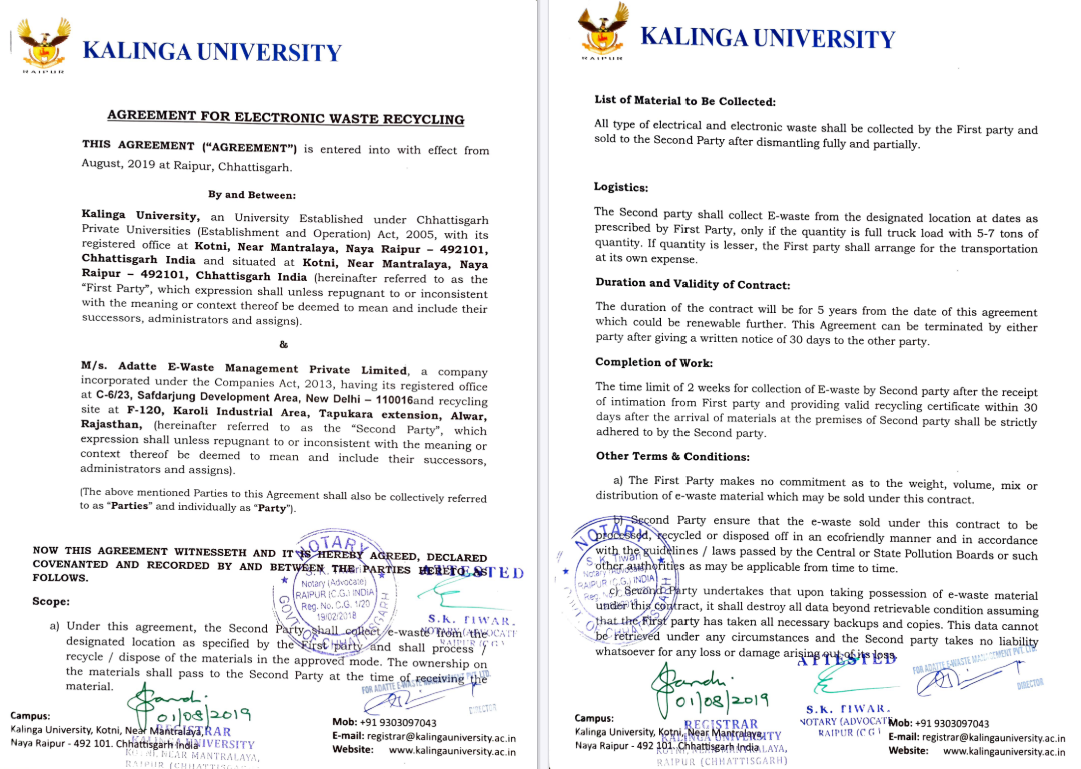
Memorandum of Understanding (MoU):
Kalinga University and M/s. Adatte E-Waste Management Private Limited have entered into a Memorandum of Understanding (MoU) to promote responsible e-waste management and sustainable recycling practices. The collaboration aims to facilitate e-waste collection, recycling, environmental awareness, research, training, skill development, and knowledge sharing, thereby supporting sustainable development and environmental protection.

Policy:






Plastic free campus signage at Kalinga University promoting sustainable practices


Activity:
On the occasion of World Environment Day 2025, six students from Kalinga University participated in the Poster Making Competition organized by the Chhattisgarh Environment Conservation Board on the theme “Plastic Pollution – Side Effects & Solutions.” The event promoted environmental awareness, responsible consumption, and creative advocacy for sustainable practices, reinforcing the University's commitment to SDGs 4, 12, 15, and 17 through active student engagement.
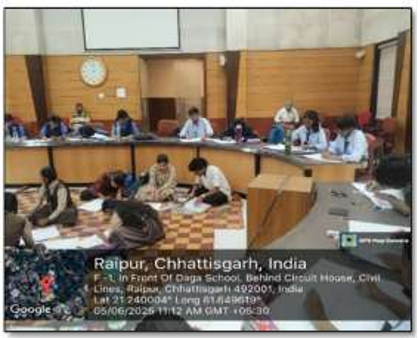
Poster Making Competition


Participants in the Poster Making Sample Posters in the Competition

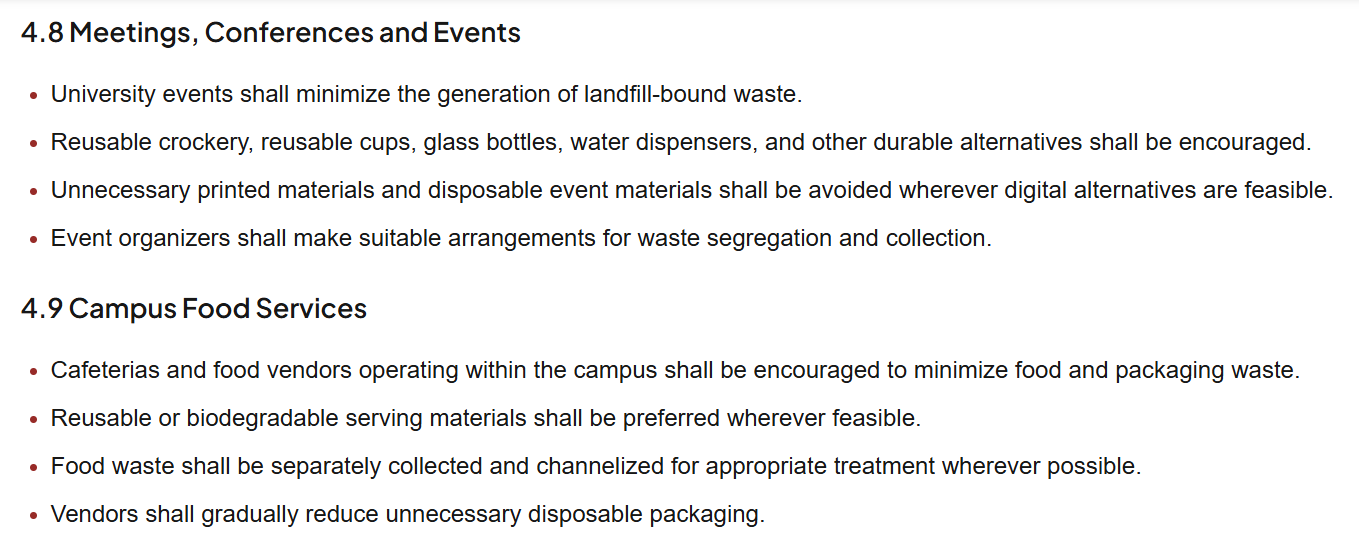
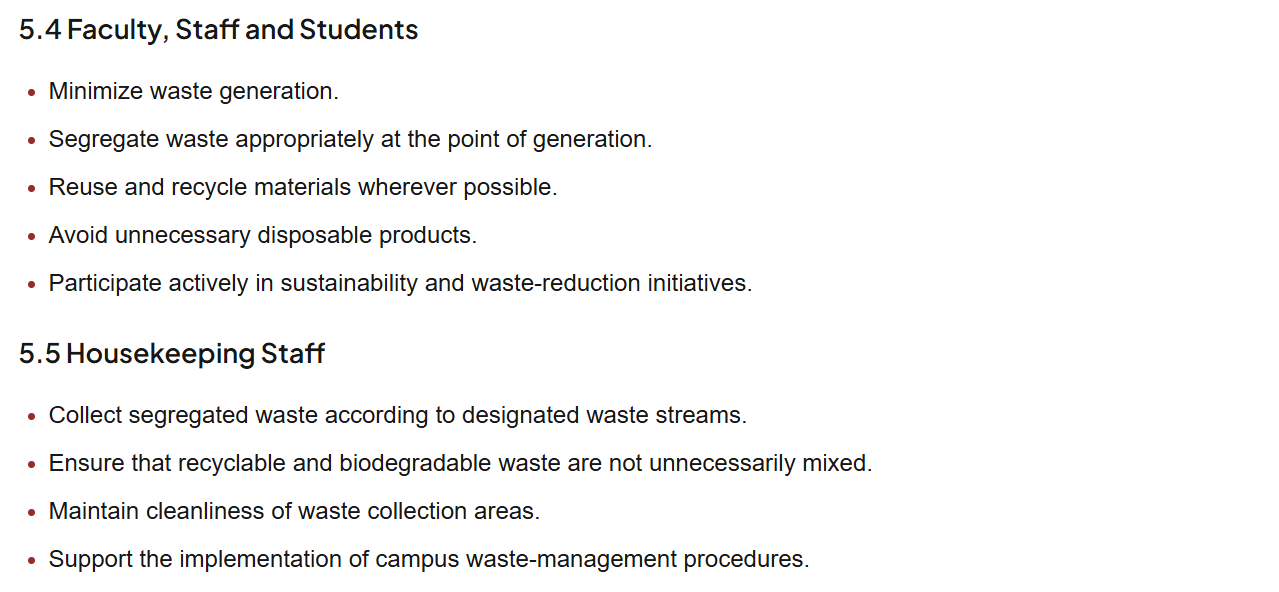
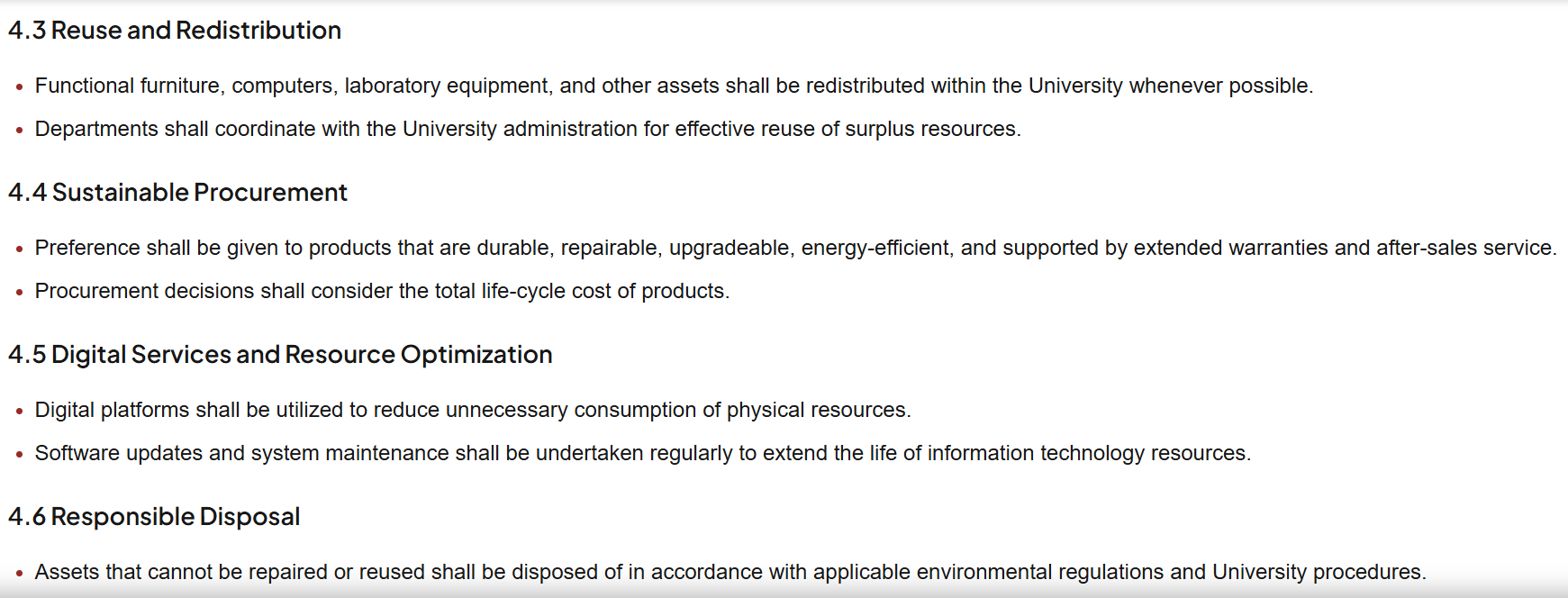
Kalinga University has adopted a policy to minimize the use of disposable and single-use plastic items across the campus, demonstrating its commitment to sustainable practices and SDG 12. The University promotes reusable and eco-friendly alternatives in cafeterias, hostels, academic buildings, and administrative offices. Awareness campaigns encourage students and staff to reduce disposable waste, while periodic monitoring ensures effective policy implementation and supports a clean, environmentally responsible campus.
Kalinga University extends its waste management and disposal services through systematic collection, segregation, recycling, and environmentally responsible disposal practices, ensuring sustainable resource management across all campus facilities.
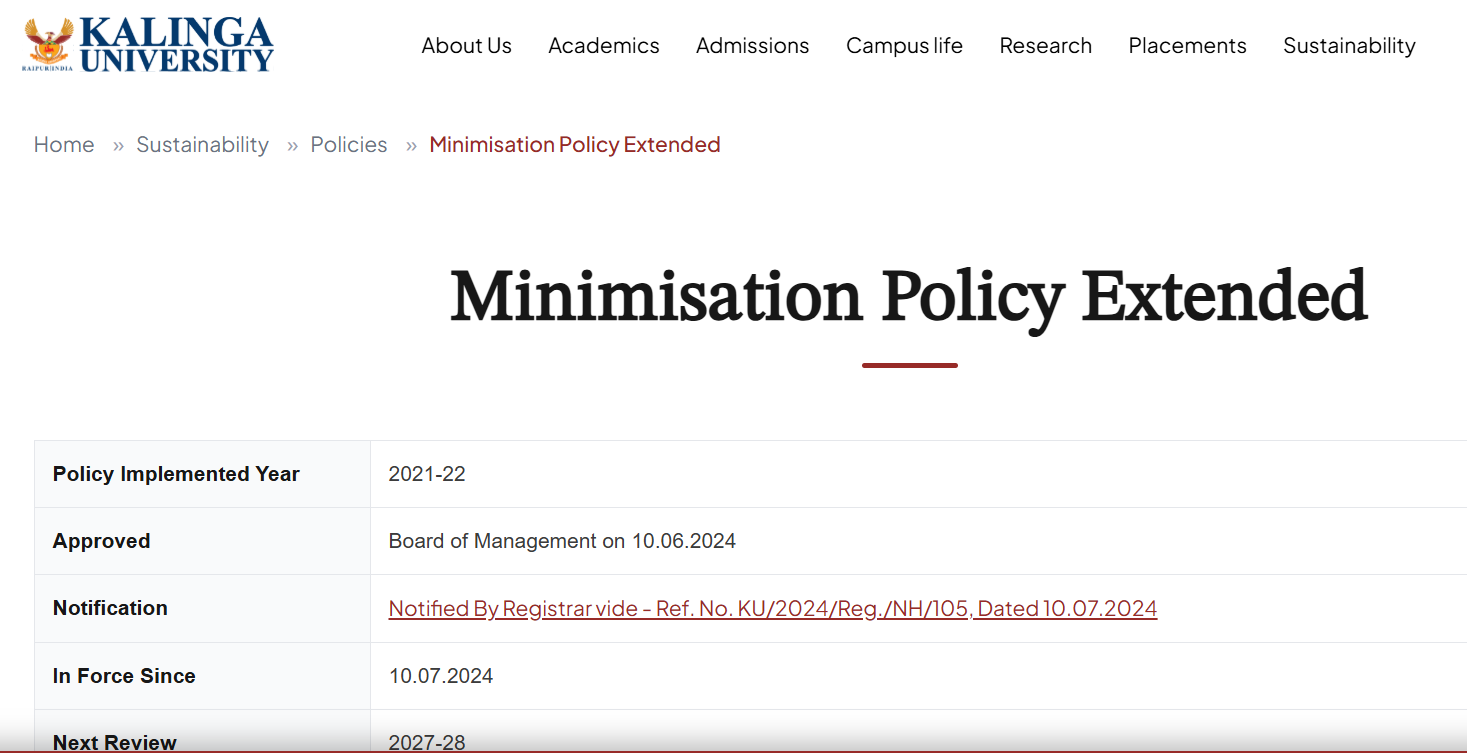
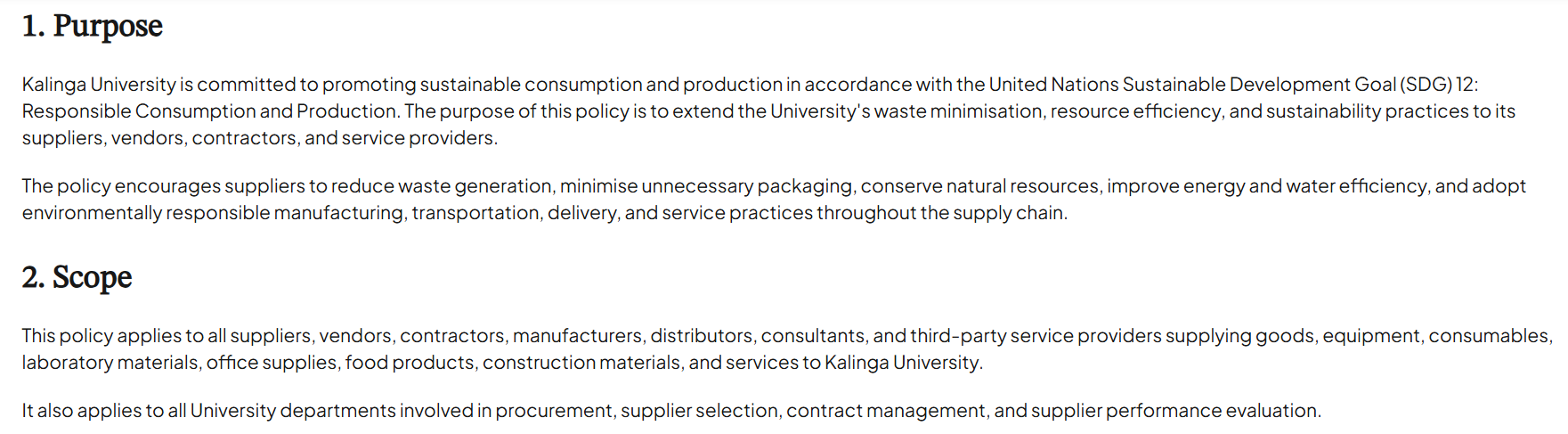
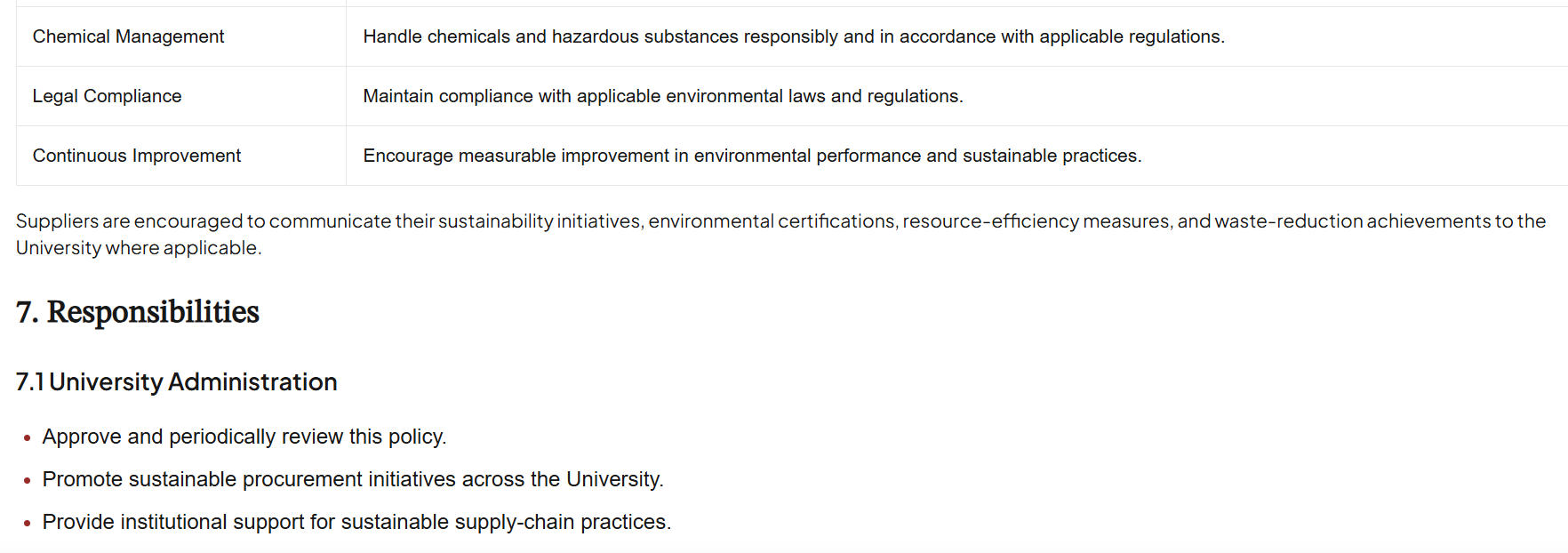
The related policy for the same is attached below.








Collection/Recycling/Reuse of waste water
Kalinga University has established an efficient wastewater management system to treat sewage and wastewater generated from hostels, academic blocks, laboratories, and other campus facilities. The treated water is reused for landscape irrigation, gardening, and other non-potable purposes, reducing dependence on freshwater resources. Regular monitoring ensures compliance with environmental standards while supporting sustainable water management, pollution prevention, and resource conservation, demonstrating the University's commitment to environmentally responsible campus operations under SDG 12.


Water Harvesting Tank
Water Harvesting Tank


Drip Water Purifier
Drip Water Wall
Drip Water Tank

E-Waste Management
Kalinga University follows a standard procedure for the safe collection, storage, and disposal of hazardous laboratory and electronic waste. Obsolete equipment is temporarily stored and subsequently handed over to authorized recycling agencies, ensuring environmentally sound disposal, regulatory compliance, and prevention of pollution from hazardous substances.
Kalinga University has implemented a systematic waste tracking mechanism to monitor the generation, segregation, and disposal of waste across the campus. Waste from academic buildings, hostels, cafeterias, laboratories, and administrative offices is regularly recorded and categorized into biodegradable, non-biodegradable, recyclable, and hazardous waste streams. The collected data supports effective waste reduction, recycling, and composting initiatives, enabling continuous improvement in resource management and reinforcing the University's commitment to sustainable campus operations under SDG 12.

Kalinga University, Naya Raipur, has established a systematic waste management and recycling framework to promote responsible consumption and environmental sustainability in alignment with SDG 12. Waste generated across academic buildings, laboratories, hostels, cafeterias, and administrative offices is segregated at the source into biodegradable, recyclable, and other waste categories. Recyclable materials, including paper, plastic, glass, and metal, are collected and transferred to authorized recyclers, while organic waste is processed through composting and utilized for campus landscaping and green spaces. These initiatives significantly reduce waste sent to landfills, enhance resource efficiency, and foster sustainable practices among students and staff. The details are presented in the table below:
| Financial Year | Total (Wet + Dry) Solid Waste Generated | Total Horticulture Waste Generated | Total Dry Waste Generated | Total Wet Waste Generated | Total Dry Waste Recycled | Total Biodegradable (Food) Waste Processed | Total Electronic Waste Generated |
|---|---|---|---|---|---|---|---|
| Unit | Tons | Tons | Tons | Tons | Tons | Tons | KG |
| 2024-2025 | 11.10 | 0.44 | 0.18 | 0.10 | 0.07 | 0.50 | 2.00 |
| 2023-2024 | 13.30 | 0.42 | 0.15 | 0.09 | 0.06 | 0.46 | 3.50 |
| 2022-2023 | 6.80 | 0.40 | 0.13 | 0.09 | 0.05 | 0.43 | 3.80 |
Kalinga University is committed to transparency and continuous improvement in its sustainability initiatives. In alignment with SDG 12.4, the University publishes sustainability-related information through its dedicated SDG Report and institutional publications, which are publicly accessible on the University website. These reports present key sustainability initiatives, resource management practices, waste management measures, environmental performance, and future commitments, demonstrating accountability, measurable progress, and the University's dedication to sustainable campus development.

Press Release of the International Conference at Kalinga University regarding sustainable managment
Responsible Consumption and Production at Kalinga University
Recognizing the urgent need to promote sustainable consumption and responsible resource management, Kalinga University, Naya Raipur, has adopted a range of environmentally responsible practices aligned with Sustainable Development Goal (SDG) 12: Responsible Consumption and Production. The University has installed a 500 KW rooftop solar power plant to harness clean and renewable energy, significantly reducing dependence on conventional electricity generated from fossil fuels. This initiative reflects the University's commitment to reducing greenhouse gas emissions, mitigating climate change, and fostering a culture of environmental stewardship among students, faculty, and staff. The solar power facility not only contributes to lowering the University's carbon footprint but also reduces operational energy costs, enabling the institution to allocate additional resources towards academic development, research, and sustainability initiatives.
In addition to renewable energy generation, Kalinga University actively promotes responsible consumption through energy-efficient infrastructure, LED lighting systems, water conservation measures, rainwater harvesting, waste segregation, recycling initiatives, and the reduction of single-use plastics across the campus. Organic waste generated from hostels and cafeterias is processed through composting practices, while awareness campaigns, green audits, tree plantation drives, and sustainability-focused outreach programmes encourage responsible resource utilization within the University community. The University also integrates sustainable development principles into its academic curriculum, research activities, and extension programmes, empowering students to develop innovative solutions for environmental challenges. Through these comprehensive initiatives, Kalinga University demonstrates its unwavering commitment to sustainable production practices, resource efficiency, and environmental conservation, contributing meaningfully towards achieving the targets of SDG 12: Responsible Consumption and Production.

Solar system installed in the University campus


Motion sensor based sensor LED lights for energy conservation


Use of Battery Operated Vehicles in the Campus
Water Resources and Management: University has its own tube well for meeting its water requirements for various purposes such as drinking, use in washrooms, canteen and gardening. Since the University does not have staff quarters at present in the University premises, therefore, no household domestic water demand is there, therefore, majority of water consumed in the University premises is for sanitary and gardening purposes.
Water Conservation Measures through water harvesting tank: In order to reduce dependency of water from tube-well and also to recharge underground water resources, University had created a water harvesting tank in the back side of the Campus.





Water Management Detail
| Financial Year | Total Horsepower of all Pumps Installed | Total Rooftop Area connected to RWH | Percentage of Wastewater Treated & Reused | Total No. of Taps in the Campus | No. of Taps with Low-Flow Fixtures | Total Rooftop Area |
|---|---|---|---|---|---|---|
| Unit | HP | Sq.ft | % | Number | Number | Sq.ft |
| 2024-2025 | 120 | 1645432.000 | 82.000 | 970 | 486 | 3940225 |
| 2023-2024 | 120 | 1645432.000 | 78.600 | 970 | 470 | 3940225 |
| 2022-2023 | 120 | 1502345.000 | 76.000 | 963 | 405 |
Landscaping for the Green Campus
Photographs:


Some of the programs include:
Green-Coverage Detail:
| Financial Year | Total Campus Land Area (Acres) | Approximate Green-Covered Area (Acres) | Number of Mature Trees (>10 years) | Saplings Planted this Year |
|---|---|---|---|---|
| Unit | Acres | Acres | Numbers | Numbers |
| 2024-2025 | 45.000 | 20.000 | 71520 | 17800 |
| 2023-2024 | 45.000 | 20.000 | 55130 | 15260 |
| 2022-2023 | 33.000 | 10.000 | 81572 | 12450 |