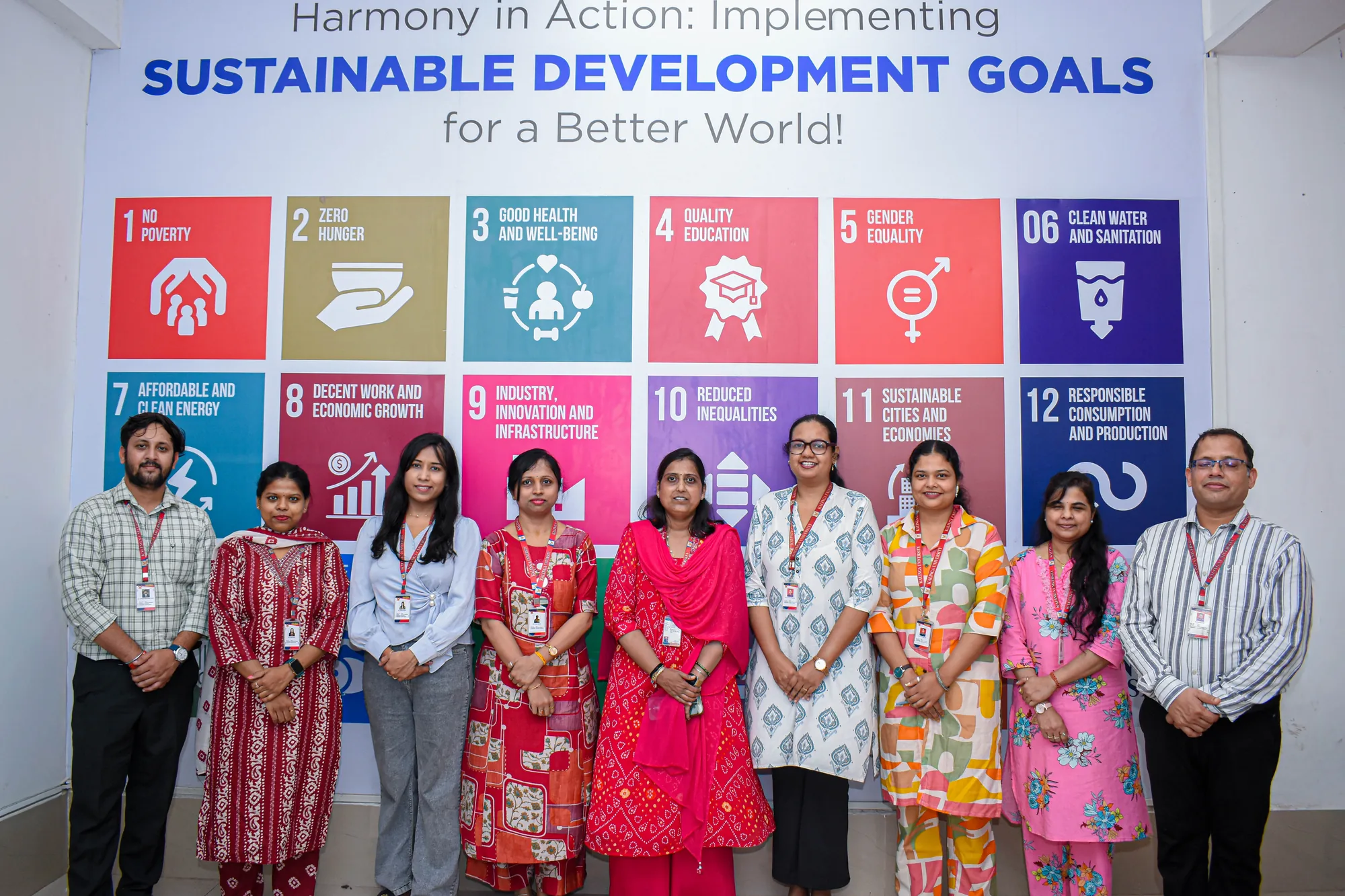
SDG 5: Gender Equality Report

Loading
Admissions Closing Soon for 2026-27
Apply NowGender equality is recognized as a fundamental human right and an essential foundation for achieving peaceful, prosperous, and sustainable societies. Despite significant progress in education, healthcare, political participation, and economic opportunities over the past few decades, women and girls continue to experience discrimination, violence, unequal access to resources, and underrepresentation in leadership positions across the world.

SDG 05 Related Publications (2024-25)
Cumulative SDG 05 Related Publications
Citation Count
Field-Weighted Citation Impact (FWCI)
No. of Events
Kalinga University recognizes education as one of the most effective instruments for advancing gender equality and inclusive development. In alignment with Sustainable Development Goal 5, the University integrates principles of equality, human dignity, constitutional values, and social justice into its academic ecosystem. Through interdisciplinary programmes, value-added courses, skill enhancement initiatives, and co-curricular activities, the University seeks to cultivate graduates who are socially responsible, ethically conscious, and committed to promoting gender equity in their professional and personal lives.
The University's curriculum follows the principles of the National Education Policy (NEP) 2020 by encouraging multidisciplinary learning, value-based education, experiential learning, and holistic development. Gender sensitivity is promoted not only through classroom teaching but also through seminars, workshops, awareness campaigns, community engagement, and student support mechanisms. The University's Gender Equity initiative explicitly aims to develop curricula that recognize the contributions of women, challenge discriminatory practices, and promote positive attitudes and non-violent relationships among students.
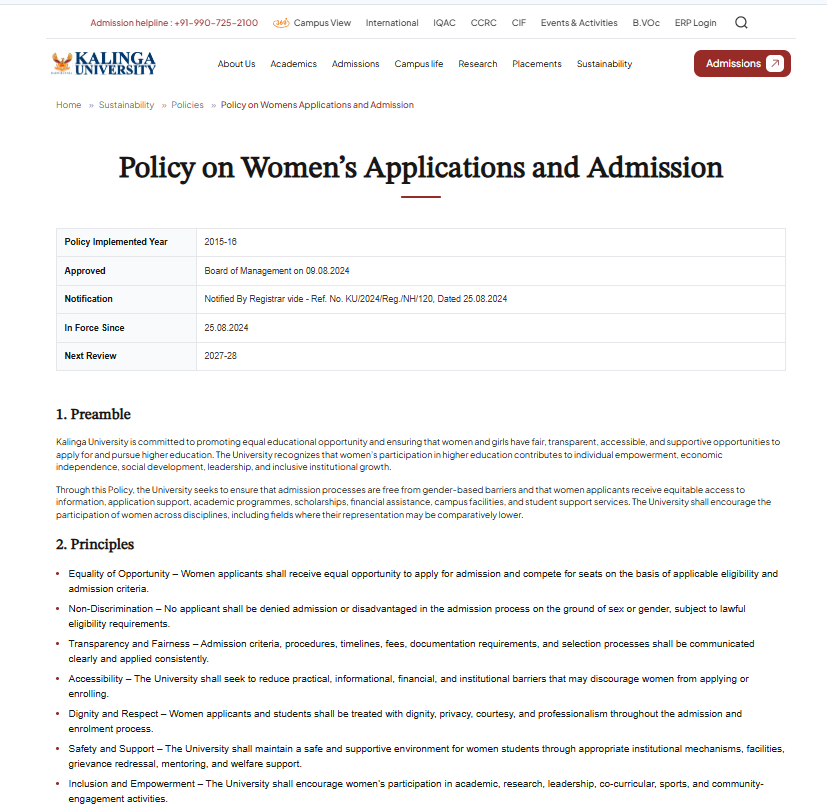

Gender Courses
While Kalinga University does not currently advertise standalone degree programmes exclusively titled "Gender Studies" or "Women's Studies," gender-related concepts are integrated across several disciplines including Law, Political Science, Sociology, Social Work, Psychology, Education, and Liberal Arts. These programmes examine issues relating to equality, social justice, women's rights, constitutional protections, public policy, and sustainable development.


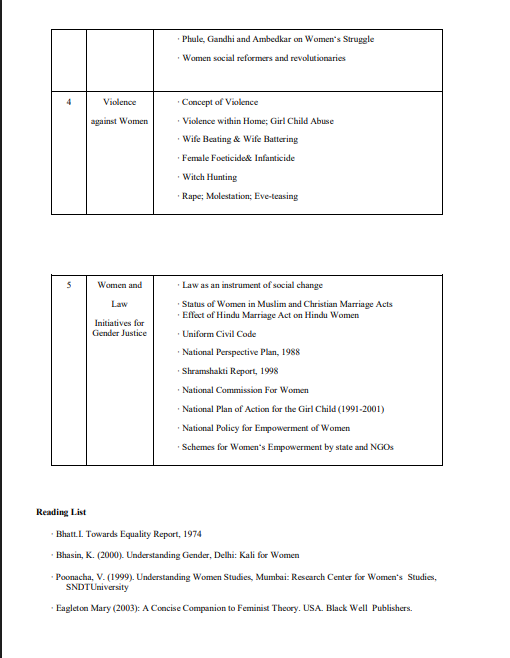

Human Rights Education
Human rights education forms an important component of teaching across several programmes, particularly within the Faculty of Law, Arts and Humanities, Social Sciences, and Management. Students are introduced to international human rights frameworks, constitutional safeguards, equality before law, protection against discrimination, labour rights, child rights, and women's rights

Constitutional Studies
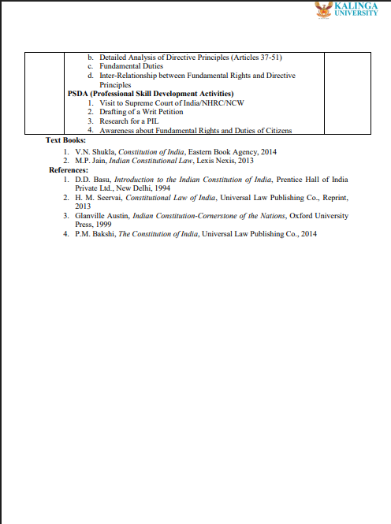
The Constitution of India provides the legal foundation for gender equality, and constitutional values are integrated into teaching across multiple disciplines. Courses in Political Science, Public Administration, Law, and related social science programmes emphasize constitutional provisions concerning equality, dignity, non-discrimination, fundamental rights, directive principles of state policy, and affirmative action.
Students examine constitutional provisions such as Articles 14, 15, 16, 21, and 39, along with significant judicial decisions and legislative measures including the Sexual Harassment of Women at Workplace (Prevention, Prohibition and Redressal) Act, 2013. Classroom learning is complemented through seminars, Constitution Day celebrations, legal literacy activities, and discussions on contemporary issues relating to gender justice and inclusive governance.


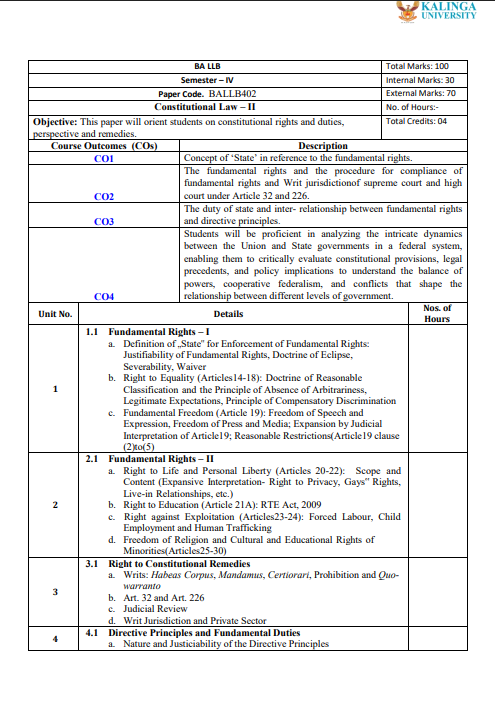
Women's Studies
Although Kalinga University does not presently operate a separate Department or Centre for Women's Studies, themes related to women's empowerment, gender justice, feminist perspectives, and inclusive development are incorporated within several interdisciplinary programmes. Faculty encourage students to undertake dissertations, research projects, presentations, and field-based studies addressing women's participation in education, health, entrepreneurship, governance, rural development, and sustainable development.
Gender Mainstreaming
The University's stated objectives include:
Gender mainstreaming is further supported through awareness campaigns, workshops, International Women's Day celebrations, legal literacy programmes, and sensitization activities conducted throughout the academic year.
Curriculum Integration
Gender equality is integrated across the curriculum through interdisciplinary teaching rather than being confined to a single programme. Faculty members incorporate gender perspectives into subjects relating to law, governance, management, education, literature, psychology, sociology, public administration, and sustainable development.
The University follows an outcome-based education framework aligned with NEP 2020, encouraging critical thinking, ethical leadership, social responsibility, and experiential learning. This approach enables students to understand gender issues within broader contexts such as human rights, public policy, community development, environmental sustainability, entrepreneurship, and innovation. The University's commitment to multidisciplinary education and industry-relevant curricula supports this integrated learning environment.
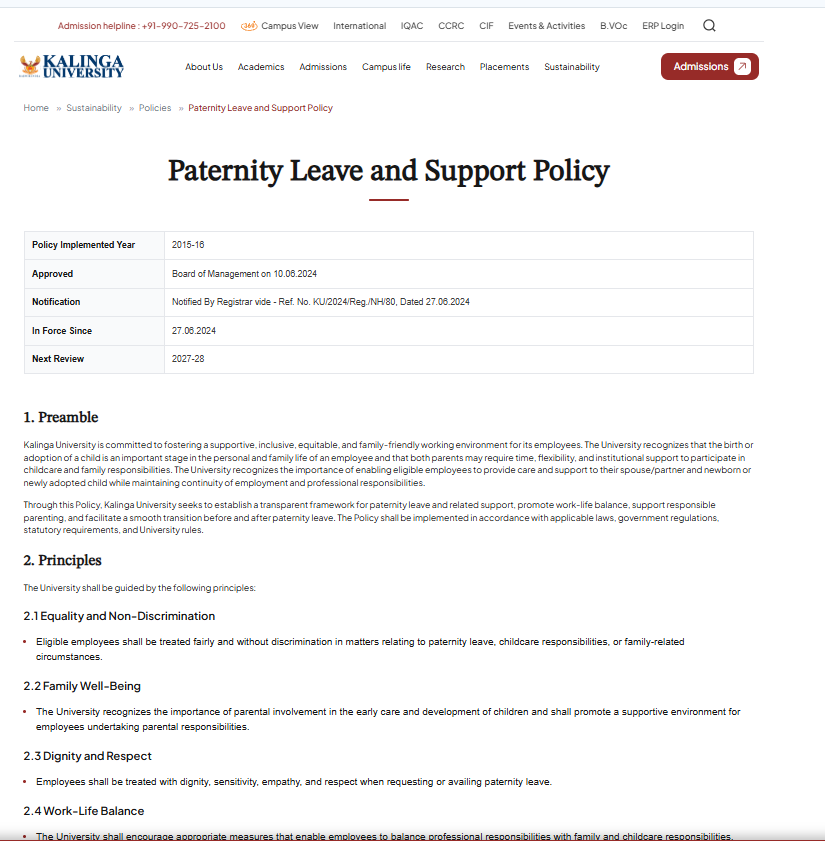
Kalinga University is committed to providing an inclusive and equitable environment for all students, employees, and visitors. This Equal Opportunity Policy aims to promote fairness, dignity, and respect for all individuals, regardless of their background, characteristics, or circumstances. This policy applies to all members of the university community, including students, employees, contractors, and visitors. It covers all aspects of university life, including admissions, employment, education, and services.


Ragging is ruining the lives and careers of innocent students and even harming their health. Ragging is completely banned on our campus, and we take strict action against any student who is found guilty of ragging. Our cell ensures that every student pursues their education without the fear of harassment or bullying. As per the order of the Supreme Court of India, UGC guidelines, and State Government instructions, Kalinga University is following the “Zero-Tolerance Policy” towards ragging.
Say No to Ragging, Say Yes to Respect! At Kalinga University, we stand united in creating a campus where safety, respect, and inclusivity thrive. From 8th to 12th August 2025, we observed Anti-Ragging Week, where students, staff, and faculty members came together to pledge for a ragging-free environment.


The Grievance Redressal Cell is established at KU as per the UGC guidelines to record the complaints of students and staff members regarding academic, administrative, discrimination, harassment, examination, finance, facilities, and infrastructure-related issues. The dedicated committee members look after the seriousness of the problems and take necessary action.

Kalinga University is committed to promoting gender equality and women's leadership in academia by providing equal opportunities for recruitment, career advancement, and leadership positions. The University encourages the participation of women in senior academic roles, including Professors, Associate Professors, Heads of Departments, Deans, and other academic leadership positions. The proportion of senior female academics is maintained through institutional human resource records and reflects the University's commitment to fostering an inclusive, diverse, and equitable academic environment in alignment with Sustainable Development Goal 5 (Gender Equality). Publicly available sources do not disclose the exact proportion of senior female academics; therefore, this indicator should be reported using official Human Resource records maintained by the University.
| Faculty (Women) Total | 13 |
|---|---|
| Administration Staff (Women) | 14 |
| Department-wise Faculty count (Women) | Faculty of Arts & Humanities - 1Faculty of Commerce & Management - 3Faculty of Education - 1Faculty of Law - 3Faculty of Pharmacy - 1Faculty of Science - 5Faculty of Technology - 0Faculty of CS & IT - 0 |
| Recent women Employee Recruitment | 240 |
| Board of Management (Women) | 5 |
| Academic Council (Women) | 4 |
| IQAC (Women) | 3 |
| Research Committee (Women) | 5 |
| Head of Department (Women) | 7 |


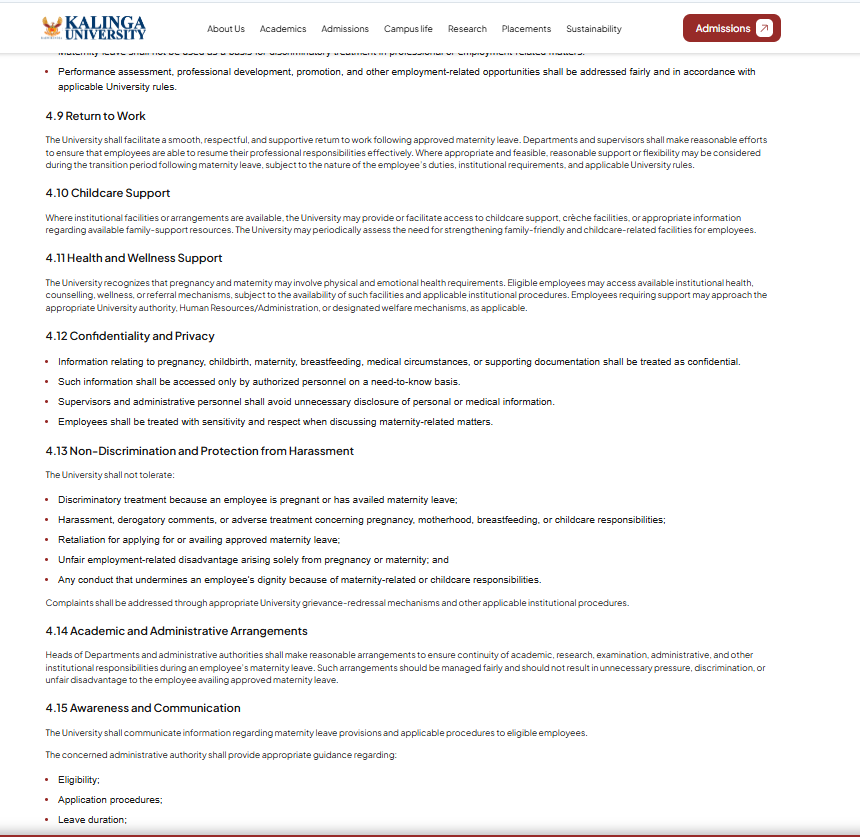
The Women's Cell or Sexual Harassment Prevention Committee has been constituted at Kalinga University under the guidelines issued by the UGC, NAAC, and the Supreme Court to consider complaints related to any sexual discrimination or harassment of girls or women within the University.


Kalinga University is committed to providing an inclusive and equitable environment for all students, employees, and visitors. This Equal Opportunity Policy aims to promote fairness, dignity, and respect for all individuals, regardless of their background, characteristics, or circumstances. This policy applies to all members of the university community, including students, employees, contractors, and visitors. It covers all aspects of university life, including admissions, employment, education, and services




| CCTV | 500 |
|---|---|
| Security | 17 |
| Emergency Helpline | 32 |
| Safe Transport | 42 |


