SDG 2: Zero Hunger Report

Loading
Admissions Closing Soon for 2026-27
Apply NowKalinga University, Raipur is committed to advancing Sustainable Development Goal 2 (Zero Hunger) by promoting research, education, innovation, and community outreach focused on food security, sustainable agriculture, and improved nutrition. Through interdisciplinary research, awareness programmes, rural engagement, and collaborations with local communities, the University encourages sustainable agricultural practices and supports initiatives that enhance nutritional well-being. Faculty members and students actively contribute through research publications, extension activities, and capacity-building programmes that address regional agricultural challenges. These collective efforts reflect the University's dedication to creating sustainable food systems, improving livelihoods, and contributing meaningfully to the global goal of ending hunger and ensuring food security for all.

SDG 02 Related Publications (2024-25)
Cumulative SDG 02 Related Publications
Field-Weighted Citation Impact (FWCI)
Citation Count
Proportion of Graduates in Health Professions (2024-25)
Converts biodegradable campus waste into nutrient-rich organic compost, promoting sustainable waste management and improving soil fertility for campus greenery.
Sustainable Food Waste Management through Vermicomposting
Utilizes food and biodegradable waste from hostels and campus facilities to generate renewable biogas and organic manure, reducing waste disposal and dependence on conventional energy sources.
Renewable Energy Generation through Biogas
Affordable Campus Dining , Food Zone with Mini-Market , Zero Food Waste Initiative , Nutrition and Health Awareness, Subsidized Staff Meals - Policy
Staff Hunger Interventions : Initiatives
The university follows an integrated campus food waste management system by converting leftover food into valuable resources through its biogas plant and vermi-compost unit. The generated biogas is utilized for hostel food preparation, while the vermi-compost enriches campus landscaping and gardening. Awareness posters, campaigns, and educational programs encourage students and staff to minimize food wastage, adopt responsible consumption practices, and conserve natural resources, thereby fostering a culture of sustainability and supporting a circular economy on campus.
Kalinga University is committed to reducing food waste and promoting responsible food consumption as part of its efforts towards SDG 2: Zero Hunger. The University has established a systematic mechanism to monitor and quantify food waste generated from hostel messes and campus dining facilities, enabling the assessment of consumption patterns and implementation of effective waste reduction strategies. During the academic session 2024–2025, a total of 8,294 kg of food waste was generated from July 2024 to June 2025, with an average monthly generation of approximately 691 kg and an average daily generation of around 22.35 kg. Importantly, 100% of the collected food waste was processed through the campus Biogas Plant, supporting sustainable waste management, resource recovery, and circular economy practices. Alongside systematic monitoring and processing, the University actively promotes awareness about food conservation and prevention of food wastage among students, faculty, staff, and other campus stakeholders.
Awareness campaigns, posters, digital displays, and signboards carrying messages such as “Stop Food Waste” and “Serve What You Waste, Can Save Others Life” are displayed across dining and other relevant areas to encourage mindful eating and responsible consumption. Students and staff are encouraged to take only the quantity of food they can consume, avoid over-serving, and recognize food as a valuable resource. Through the integrated approach of monitoring, awareness generation, food waste prevention, and sustainable waste processing, Kalinga University is fostering a culture of responsible consumption and environmental stewardship across the campus. These initiatives contribute particularly to SDG 2 (Zero Hunger), SDG 7 (Affordable and Clean Energy), SDG 12 (Responsible Consumption and Production), and SDG 13 (Climate Action) while promoting food conservation, resource efficiency, and sustainable campus development.


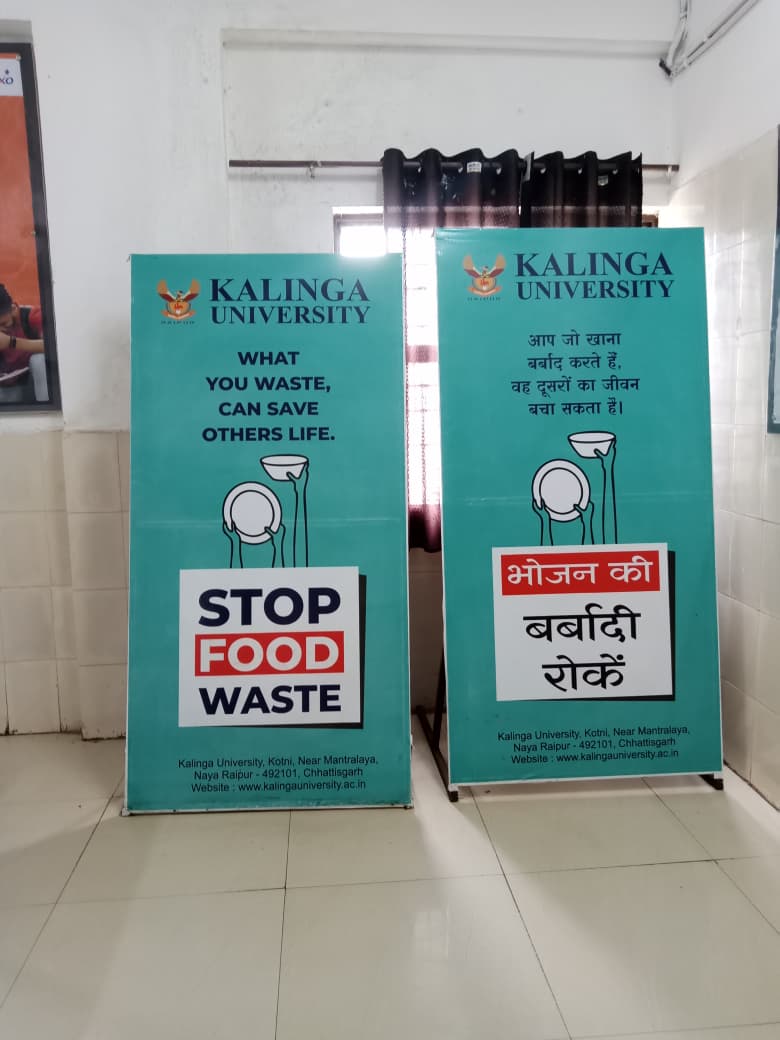
Awareness Posters at Mess & Canteen
Kalinga University has a diverse campus community comprising students, teaching staff, non-teaching staff, marketing staff, and other supporting personnel. The total campus population is 6500+ individuals. This substantial campus community provides a strong foundation for implementing and promoting the United Nations Sustainable Development Goals (SDGs) through inclusive education, employee welfare, sustainable campus practices, health and well-being, and community engagement initiatives.
Kalinga University has established a biogas plant as part of its commitment to sustainable waste management and environmental conservation. The facility utilizes food waste generated from university cafeterias and hostels, along with other biodegradable organic waste, to produce biogas through the process of anaerobic digestion. The generated biogas is used for food preparation in the university hostels, thereby reducing dependence on conventional fuels and lowering greenhouse gas emissions. In addition, the nutrient-rich slurry produced during the process is utilized as an organic fertilizer for campus landscaping and gardening. This initiative promotes resource conservation, circular economy practices, and sustainable campus operations while contributing to the University’s efforts toward SDG 2 (Zero Hunger).

Food waste generated on campus is converted into clean biogas for hostel cooking, replacing LPG and producing organic fertilizer through sustainable waste management.
Table: Year-wise Summary of Campus Food Waste Generation and Processing, 2024–2025
Hostel Mess, Hygienic Canteens, and Food Zone with Mini-Market
| S. No. | Month | Food Waste Generated (kg) | Average per Day (kg) | Waste Utilized/Processed (kg) | Remarks |
|---|---|---|---|---|---|
| 1 | July 2024 | 297 | 9.58 | 297 | Biogas Plant |
| 2 | August 2024 | 680 | 22.67 | 680 | Biogas Plant |
| 3 | September 2024 | 790 | 25.48 | 790 | Biogas Plant |
| 4 | October 2024 | 769 | 25.63 | 769 | Biogas Plant |
| 5 | November 2024 | 650 | 20.97 | 650 | Biogas Plant |
| 6 | December 2024 | 720 | 23.23 | 720 | Biogas Plant |
| 7 | January 2025 | 794 | 25.61 | 794 | Biogas Plant |
| 8 | February 2025 | 840 | 30 | 840 | Biogas Plant |
| 9 | March 2025 | 823 | 26.55 | 823 | Biogas Plant |
| 10 | April 2025 | 783 | 26.10 | 783 | Biogas Plant |
| 1 | May 2025 | 834 | 26.90 | 834 | Biogas Plant |
| 12 | June 2025 | 314 | 10.47 | 314 | Biogas Plant |
Kalinga University, Naya Raipur, is committed to eliminating student hunger by ensuring continuous access to safe, nutritious, and affordable food for all students. The university operates well-maintained hostel mess facilities, hygienic canteens, and a Food Zone with a mini-market within the campus. The mini-market offers healthy food items, beverages, and daily essentials at reasonable prices, making nutritious food easily accessible. These facilities ensure that students have convenient access to balanced meals and healthy food options throughout the day, promoting their health, well-being, and academic success.
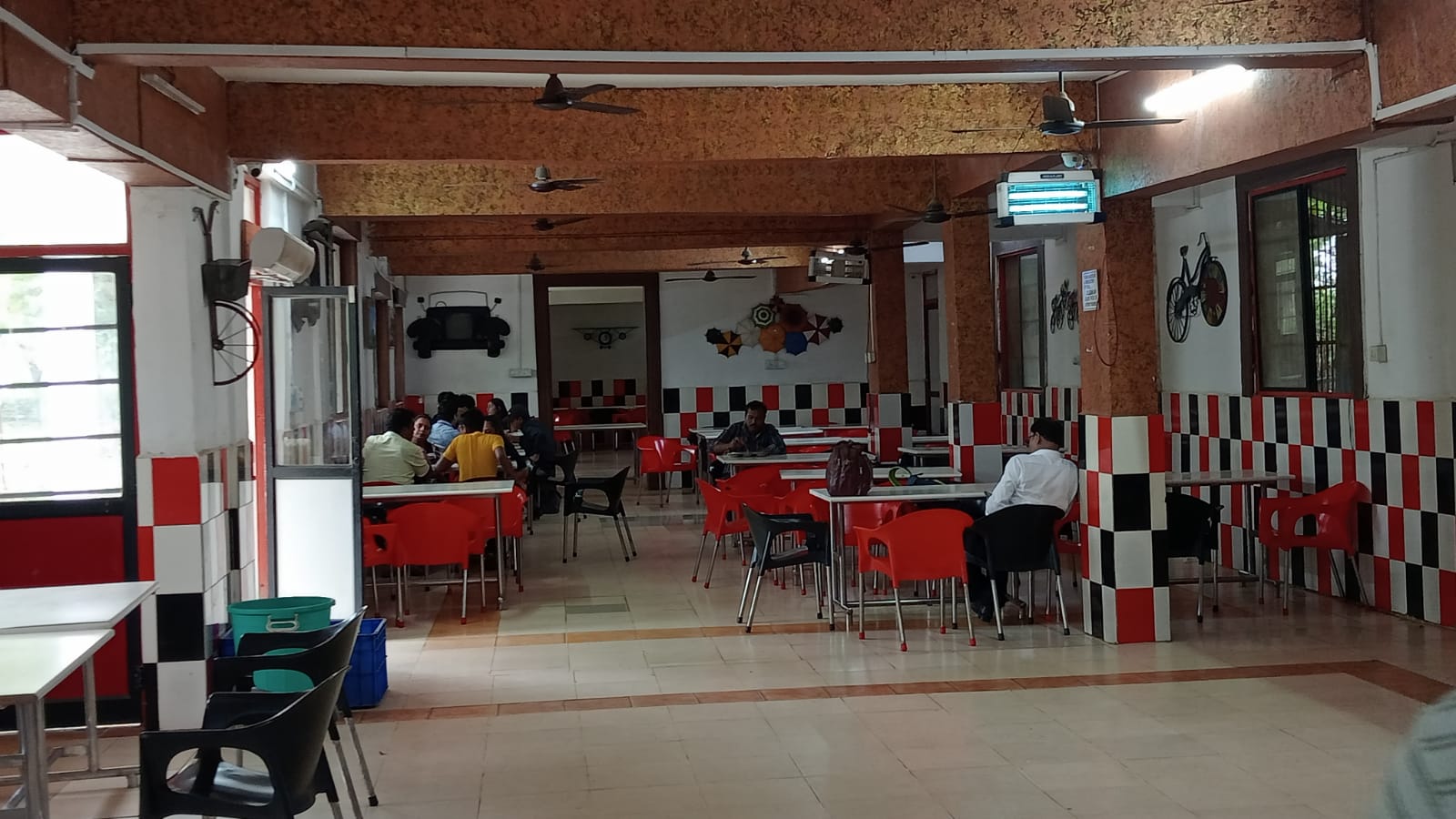
Campus Mess, Kalinga University – Providing Nutritious, Hygienic, and Affordable Meals to Students and Staff.


Mini-Market at Kalinga University Campus – Providing Stationery, Daily-Need Essentials, Snacks, Beverages, and Other Convenient Shop Services for Students and Staff.
Kalinga University, Naya Raipur, recognizes that access to safe, nutritious, and affordable food is fundamental to students' health, well-being, academic success, and overall campus experience. To ensure that no student faces food insecurity during their academic journey, the University has established accessible and affordable food facilities across the campus.
Through these sustained initiatives, Kalinga University creates an inclusive campus environment where every student has reliable access to healthy and affordable food, reinforcing its commitment to student welfare, equity, sustainable campus practices and Sustainable Development Goal (SDG) 2: Zero Hunger.
Kalinga University, Naya Raipur, is committed to promoting food security, nutritional well-being, and social equity across its campus. Recognizing that access to nutritious and affordable food is essential for academic success and overall well-being, the University has established comprehensive support systems to ensure that students and staff have continuous access to healthy food, these initiative has been taken -
Through these initiatives, Kalinga University ensures that nutritious and affordable food remains readily available on campus, helping prevent food insecurity while fostering a healthy, inclusive, and sustainable learning environment in alignment with Sustainable Development Goal (SDG) 2: Zero Hunger.


Mini – Market, Kalinga Canteen, Food distribution at nearby villages
Kalinga University is committed to promoting sustainable, healthy, and environmentally responsible food practices across its campus in alignment with the Sustainable Development Goals. The University has implemented various initiatives to support sustainable food systems by reducing food waste, encouraging responsible consumption, and adopting eco-friendly practices. These efforts create environmental awareness among students, faculty, and staff while fostering a culture of sustainability and responsible resource management throughout the campus.
Sustainable Food Practices and Initiatives:
Kalinga University has adopted six villages—Kotni, Paloud, Kotrabhata, Tandul, Kuhera, and Parsada—and actively promotes the use of locally sourced and seasonal produce. Fresh vegetables and other food items procured from farms and suppliers in these villages are utilized on campus, thereby reducing transportation-related carbon emissions. This initiative supports local agricultural communities, strengthens rural livelihoods, and encourages sustainable food consumption practices while contributing to environmentally responsible campus operations and regional economic development.
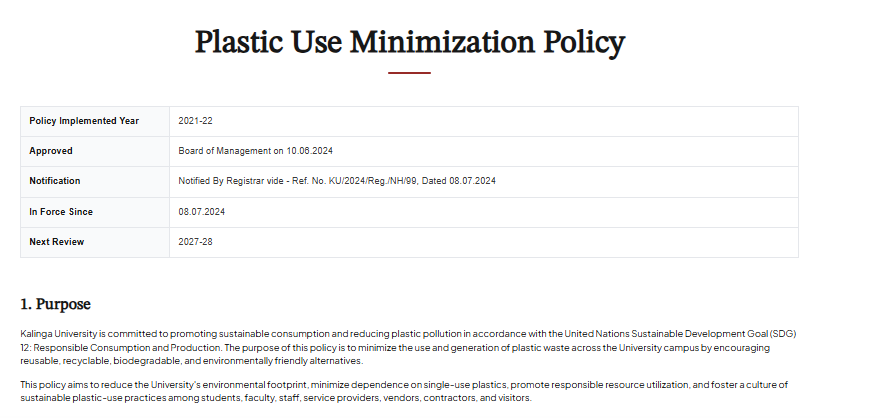
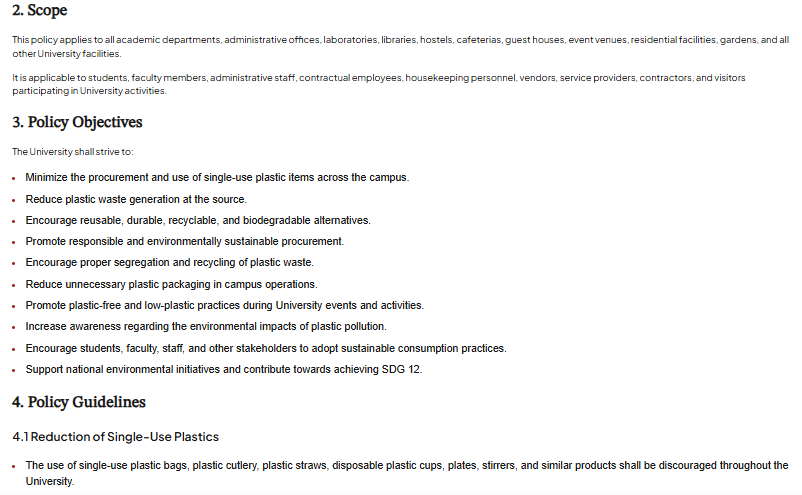
Kalinga University has adopted a Single-Use Plastic Ban Policy to minimize plastic waste and promote environmental sustainability across the campus. Under this policy, the use of disposable plastic bags, cups, plates, straws, bottles, and cutlery is prohibited and replaced with reusable or biodegradable alternatives during academic, administrative, and campus events. The University promotes a plastic-free campus by encouraging the use of eco-friendly alternatives, such as paper cups and other biodegradable products, to reduce solid waste generation. Regular awareness campaigns, signage, and monitoring ensure effective implementation and compliance among students, faculty, staff, and visitors. Through these initiatives, the University significantly reduces plastic pollution, strengthens responsible waste management practices, and reinforces its commitment to the Sustainable Development Goals.
Plastic Prohibition Policy –


Kalinga University has established an effective food waste management system through composting and vermicomposting to promote sustainable waste disposal practices. Biodegradable waste, including food waste from cafeterias and hostels, is collected and processed along with garden waste such as dry leaves, grass clippings, and pruning residues in compost pits and vermicomposting units. Earthworms are used in the vermicomposting process to accelerate the decomposition of organic matter and produce nutrient-rich vermin-compost. The compost and vermin-compost generated are utilized for maintaining the University's gardens, lawns, and plantations, reducing waste sent to landfills while supporting a circular economy and environmentally sustainable campus management in alignment with the Sustainable Development Goals.

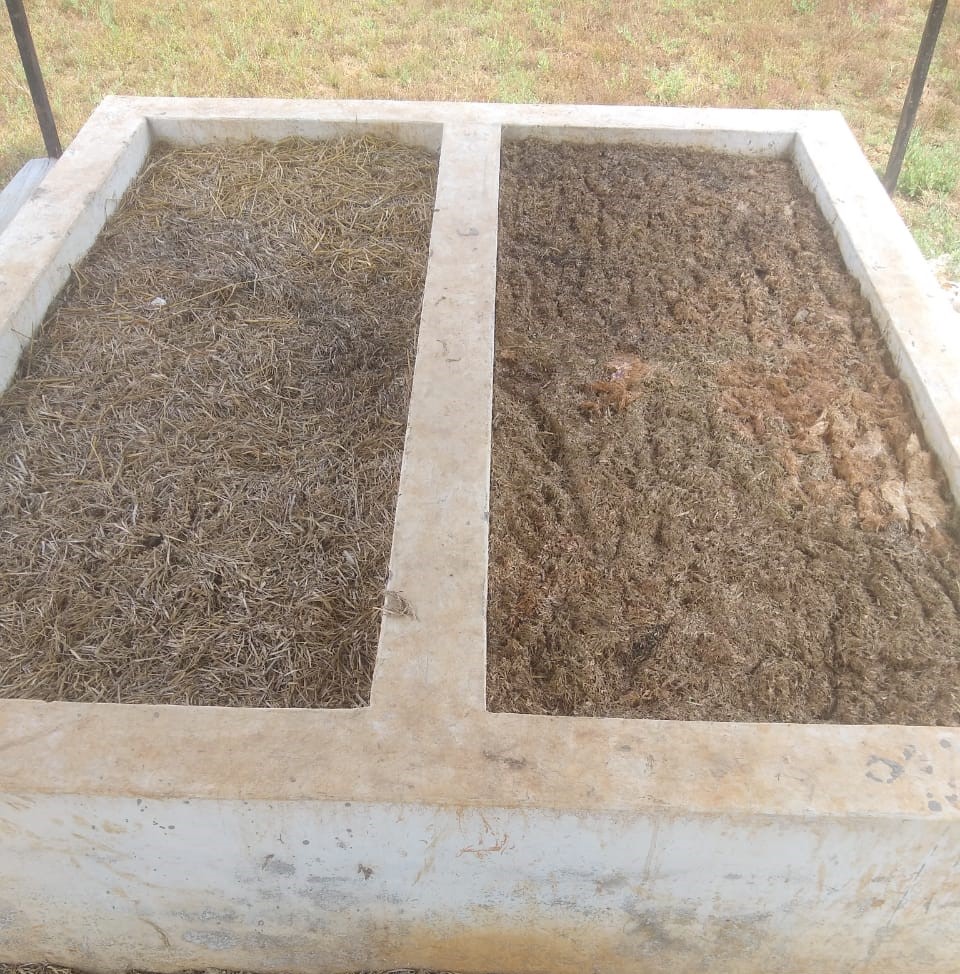
Food Waste Management through Vermicomposting – Converting Organic Waste into Nutrient-Rich Compost for Sustainable Campus Practices
Kalinga University has also established a biogas plant that converts food and other biodegradable waste generated from hostels and campus dining facilities into clean, renewable energy. The biogas produced is used for cooking in the hostel kitchens, reducing dependence on LPG and lowering greenhouse gas emissions. In addition to generating clean energy, the plant produces nutrient-rich slurry, which is utilized as organic fertilizer for campus gardens and plantations. This initiative promotes sustainable waste management, resource recovery, and circular economy practices while contributing to the University's environmental sustainability goals.

Biogas Plant at Kalinga University – Converting Food and Biodegradable Waste from Hostels and Campus into Renewable Energy and Organic Manure
Kalinga University regularly conducts awareness programmes, workshops, campaigns and outreach activities to encourage sustainable consumption and responsible resource use among students, faculty, and staff. These initiatives promote waste reduction, food conservation, eco-friendly practices, and environmental stewardship, fostering a culture of sustainability and supporting the achievement of the Sustainable Development Goals across the campus community.
Promoting Sustainable and Healthy Food Choices
Kalinga University promotes sustainable and healthy food choices by providing balanced, nutritious, vegetarian, and vegan meal options in its hostels and canteens. The University also follows sustainable procurement practices by sourcing quality food responsibly, ensuring ethical standards while encouraging healthy eating habits and environmentally responsible food consumption across the campus.

Canteen Food Menu Chart Displayed – Promoting Meal Transparency, Nutritional Awareness, and Healthy Food Choices among Students and Staff
Mess Food Menu for National Students – Displaying Daily Meal Options to Promote Nutritional Awareness, Healthy Choices and Meal Planning.

Calorie per Meal – Indian Student Menu
| Day | Breakfast Menu | Breakfast (kcal) | Lunch Menu | Lunch (kcal) | Dinner Menu | Dinner (kcal) | Daily Total (kcal) |
|---|---|---|---|---|---|---|---|
| Monday | 4 Idli, Sambar, Coconut Chutney, Tea | 520 | Steamed Rice, Chapati, Dal Panchmel, Cabbage Aloo Mutter, Mix Veg Raita, Pickle | 820 | Steamed Rice, Chapati, Paneer Butter Masala, Dal Fry, Onion Salad, Pickle | 850 | 2,190 |
| Tuesday | Onion Paratha, Aloo Black Chana, Tea | 620 | Jeera Rice, Chapati, Dal Tadka, Lauki Chana Masala, Green Salad, Pickle | 780 | Steamed Rice, Chapati, Dal Fry, Aloo Soya Masala, Onion Salad, Pickle | 800 | 2,200 |
| Wednesday | 4 Vada, Coconut Chutney, Tea | 520 | Steamed Rice, Chapati, Dal Tomato, Egg Curry/Vegetable Do Pyaza, Pyaz Green Salad, Pickle | 800 | Steamed Rice, Chapati, Kali Masoor Ki Dal, Aloo Green Peas Curry, Onion Salad, Gulab Jamun, Pickle | 850 | 2,170 |
| Thursday | 4 Pav, Bhaji, Tea | 740 | Steamed Rice, Chapati, Dal Vada Curry, Bhindi Aloo Masala, Mix Veg Raita, Pickle | 800 | Jeera Rice, Chapati, Dal Fry, Chole Masala, Onion Salad, Pickle | 800 | 2,340 |
| Friday | Poha, Ghugni, Boiled Egg/Banana, Tea | 630 | Steamed Rice, Chapati, Dal Panchmel, Cabbage Aloo Mutter, Green Salad, Pickle | 780 | Steamed Rice, Chapati, Dal Tadka, Egg Curry/Kofta Curry, Onion Salad, Pickle | 850 | 2,260 |
| Saturday | 5 Poori, Sabji, Tea | 730 | Steamed Rice, Chapati, Yellow Dal Tadka, Mutter Paneer, Green Salad, Pickle | 850 | Steamed Rice, Chapati, Dal Fry, Mix Veg Dry, Onion Salad, Pickle | 780 | 2,360 |
| Sunday | 2 Uttapam, Sambar, Tea | 500 | Steamed Rice, Chapati, Moong Dal Fry, Aloo Baigan Green Peas Curry, Green Salad, Pickle | 800 | Mutter Pulao, Chapati, Rajma Masala, Onion Salad, Rice Kheer, Pickle | 850 | 2,150 |
| Average | — | 609 kcal | — | 804 kcal | — | 826 kcal | 2,239 kcal/day |
Table: Calorie Content per Meal for the Indian Student Menu (Breakfast, Lunch and Dinner)
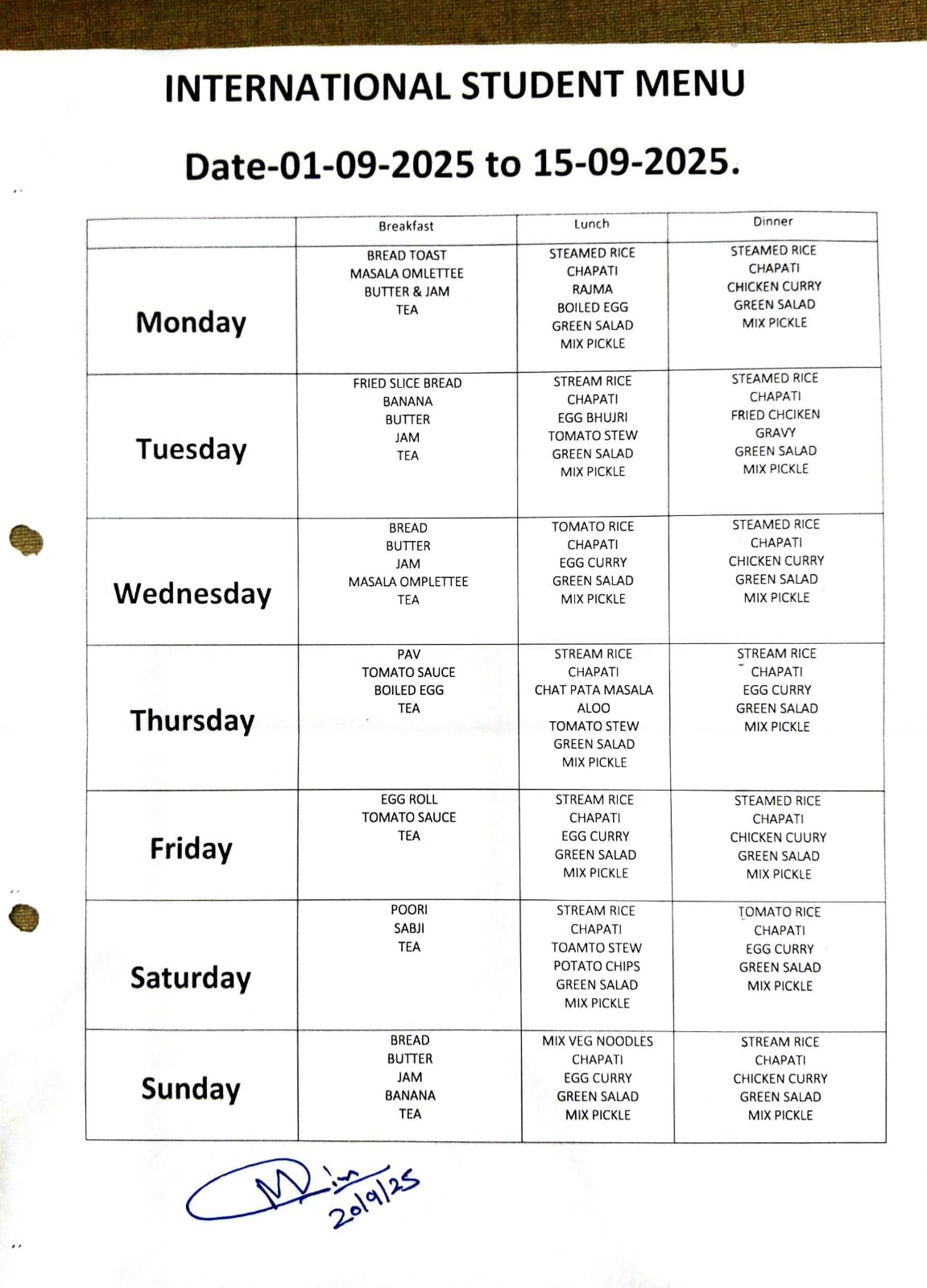
Mess Food Menu for International Students – Displaying Diverse Meal Options to Support Nutritional Well-Being and Inclusive Food Choices.
Calorie per Meal – International Student Menu
| Day | Breakfast Menu | Breakfast (kcal) | Lunch Menu | Lunch (kcal) | Dinner Menu | Dinner (kcal) | Daily Total (kcal) |
|---|---|---|---|---|---|---|---|
| Monday | Bread Toast, Masala Omelette, Butter & Jam, Tea | 600 | Steamed Rice, Chapati, Rajma, Boiled Egg, Green Salad, Pickle | 800 | Steamed Rice, Chapati, Chicken Curry, Green Salad, Pickle | 850 | 2,250 |
| Tuesday | Fried Slice Bread, Banana, Butter, Jam, Tea | 650 | Steamed Rice, Chapati, Egg Bhurji, Tomato Stew, Green Salad, Pickle | 800 | Steamed Rice, Chapati, Fried Chicken Gravy, Green Salad, Pickle | 900 | 2,350 |
| Wednesday | Bread, Butter, Jam, Masala Omelette, Tea | 600 | Tomato Rice, Chapati, Egg Curry, Green Salad, Pickle | 750 | Steamed Rice, Chapati, Chicken Curry, Green Salad, Pickle | 850 | 2,200 |
| Thursday | Pav, Tomato Sauce, Boiled Egg, Tea | 550 | Steamed Rice, Chapati, Chatpata Masala Aloo, Tomato Stew, Green Salad, Pickle | 750 | Steamed Rice, Chapati, Egg Curry, Green Salad, Pickle | 750 | 2,050 |
| Friday | Egg Roll, Tomato Sauce, Tea | 550 | Steamed Rice, Chapati, Egg Curry, Green Salad, Pickle | 750 | Steamed Rice, Chapati, Chicken Curry, Green Salad, Pickle | 850 | 2,150 |
| Saturday | Poori, Sabji, Tea | 650 | Steamed Rice, Chapati, Tomato Stew, Potato Chips, Green Salad, Pickle | 800 | Tomato Rice, Chapati, Egg Curry, Green Salad, Pickle | 800 | 2,250 |
| Sunday | Bread, Butter, Jam, Banana, Tea | 600 | Mixed Vegetable Noodles, Chapati, Egg Curry, Green Salad, Pickle | 800 | Steamed Rice, Chapati, Chicken Curry, Green Salad, Pickle | 850 | 2,250 |
| Average | — | 600 kcal | — | 779 kcal | — | 836 kcal | 2,215 kcal/day |
Table: Calorie Content per Meal for the International Student Menu (Breakfast, Lunch and Dinner)
Kalinga University, Naya Raipur, is committed to promoting food security, nutritional well-being, and social equity across its campus. Recognizing that access to nutritious and affordable food is essential for academic success and overall well-being, the University has established comprehensive support systems to ensure that students and staff have continuous access to healthy food, these initiative has been taken -
Policy reg. Subsidized Staff Meals Initiative
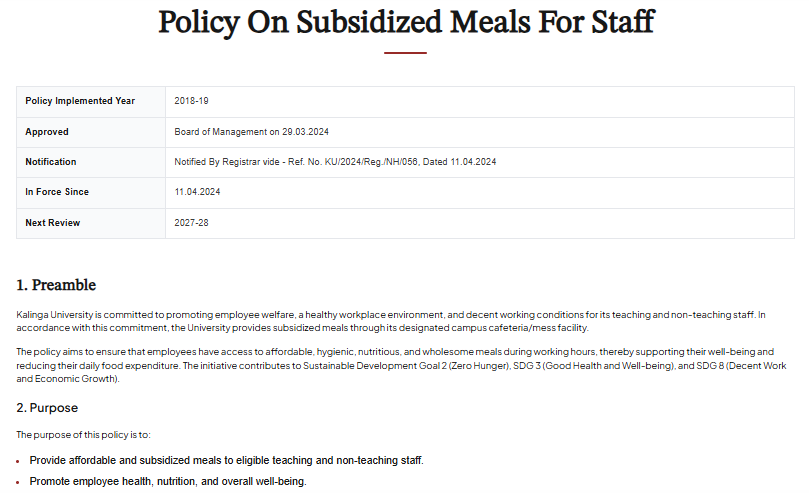


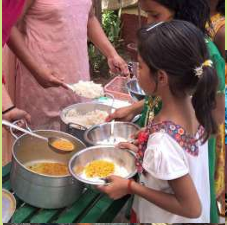
Food Distribution and Community Awareness Programs – Promoting Food Security, Nutrition, Social Responsibility and Community Well-Being