SDG 15: Life on Land Report

Loading
Admissions Closing Soon for 2026-27
Apply NowSustainable Development Goal (SDG) 15: Life on Land focuses on protecting, restoring and promoting the sustainable use of terrestrial ecosystems while ensuring the conservation of biodiversity for present and future generations. As biodiversity loss, land degradation, deforestation and ecosystem degradation continue to pose significant global environmental challenges, universities have a vital responsibility as stewards of their natural environment. Through education, research, innovation, institutional policies and community engagement, higher education institutions can contribute to sustainable land management, biodiversity conservation, ecological restoration and the responsible use of natural resources.

SDG 15-Related Publications (2024-25)
SDG 15-Related Publications (Cumulative)
Field-Weighted Citation Impact (FWCI)
Citation Count
No. of Events
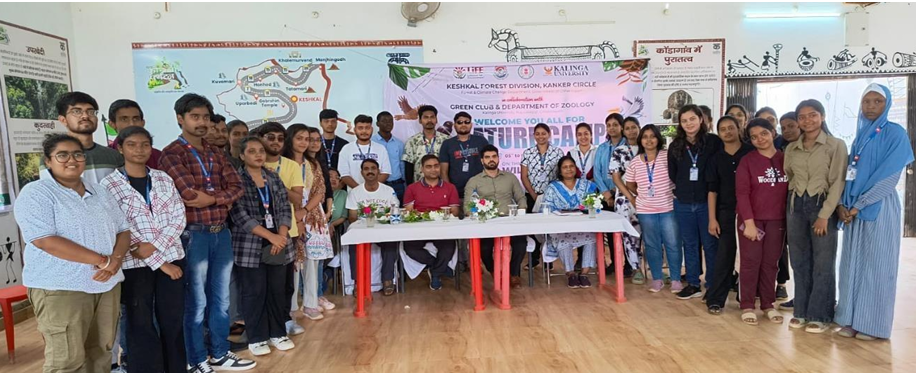
Event – Nature Camp for Forest Biodiversity and Wildlife Conservation under World Wildlife Week
Location: Keshkal Forest Division and Tatamari Eco-Tourism Resort, Keshkal, Chhattisgarh
Date of the Event: 5–6 October
No. of Participants: 29 students and 5 faculty/non-teaching staff; 34 participants in total.
Programme Objective: To promote awareness and practical understanding of forest ecosystems, terrestrial biodiversity and wildlife conservation. The programme aimed to familiarize students with forest resources, including native plants and medicinal herbs, develop biodiversity assessment skills and strengthen understanding of the importance of conserving natural forest habitats.
Programme Description: The Department of Zoology and Green Club, Kalinga University, in collaboration with Keshkal Forest Division, organized a two-day field-based nature camp focused on forest biodiversity and terrestrial ecosystem conservation. Expert sessions covered biodiversity assessment, ecological monitoring and forest conservation strategies, with emphasis on sustainable practices and protection of natural habitats. A student-led cleaning drive was also conducted at Gobrahin Shiva Mandir, Keshkal, where more than 35 kg of waste was collected to reduce pollution impacts on the surrounding forest and wildlife habitat.
Programme Outcome: The programme strengthened students' practical knowledge of forest biodiversity assessment, terrestrial ecosystem monitoring and wildlife conservation. Participants also interacted with forest officials to understand ongoing challenges and conservation measures for protecting green habitats and forest resources.
Coordinator(s): Department of Zoology, Kalinga University.
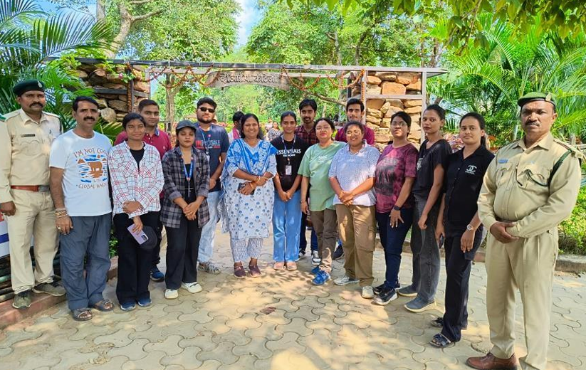
Photos of the Event`
Event - International Conference on Emerging Technologies for Sustainable Innovation, Management, and Development (ICETSIMD 2025)
Location: Auditorium and MBFF-20, Kalinga University (Hybrid Mode)
Date of the Event: 27–28 March 2025
No. of Participants: 314 registered participants and 97 attendees including researchers, academicians, industry professionals, research scholars and students
Programme Objective: To provide an international platform for researchers, academicians, practitioners, industry experts, engineers, research scholars and students to exchange knowledge and present innovations in emerging technologies for sustainable innovation, management and development. The conference aimed to foster interdisciplinary collaboration, promote research on sustainable technological solutions, encourage capacity building and explore the role of emerging technologies in addressing global challenges related to sustainability, innovation and socio-economic development.
Programme Description: The Faculty of Computer Science and Information Technology in association with the IPR Cell organized the two-day International Conference on Emerging Technologies for Sustainable Innovation, Management and Development (ICETSIMD 2025) in hybrid mode. The conference brought together experts from academia, industry and research organizations to discuss recent advancements in emerging technologies and their applications in sustainable development. The programme featured keynote lectures, technical paper presentations, interactive discussions and networking sessions covering topics such as artificial intelligence, the Internet of Things (IoT), renewable energy, innovation management and sustainable development. The conference facilitated knowledge exchange, promoted collaborative research, encouraged technology-driven solutions for sustainability and enhanced participants' understanding of emerging technologies and their practical applications in addressing global environmental, economic and societal challenges.
Coordinator(s): Dr. Omprakash Dewangan, Head, Faculty of Computer Science and Information Technology, Organizing Secretary, ICETSIMD 2025.
Brochure of the International ConferencePress Release of the International Conference







Tree Plantation in the Campus

Green House Set Up in the Campus


Vermicompost Unit in the CampusOrganic Farm in the Campus

Kalinga University campus supports a rich and diverse assemblage of plant species, reflecting

A survey of the campus vegetation recorded 104 plant species belonging to a wide range of families, growth forms, and ecological categories.

The campus flora comprises trees, shrubs, herbs, climbers, lianas, gymnosperms and ornamental plants representing families such as Fabaceae, Apocynaceae, Asteraceae, Rutaceae, Euphorbiaceae, Moraceae, Myrtaceae, Poaceae and Cactaceae. The diversity includes both native species, such as Neem (Azadirachta indica), Peepal (Ficus religiosa), Banyan relatives (Ficus racemosa), Jamun (Syzygium cumini), Ashoka (Saraca asoca) and Tulsi (Ocimum sanctum) as well as several exotic ornamental and horticultural species.
Many of the species present on campus possess significant medicinal, ecological and economic value. Medicinal plants such as Aloe vera (Aloe vera), Brahmi (Bacopa monnieri), Giloy (Tinospora cordifolia), Adusa (Justicia adhatoda), Chiraita (Andrographis paniculata) and Satavar (Asparagus racemosus) contribute to the conservation of traditional herbal resources. Fruit-bearing species including Mango (Mangifera indica), Guava (Psidium guajava), Papaya (Carica papaya), Lemon (Citrus limon) and Coconut (Cocos nucifera) further enrich the campus ecosystem.
The presence of numerous flowering and ornamental species such as Gulmohar (Delonix regia), Allamanda (Allamanda cathartica), Bougainvillea (Bougainvillea glabra), Hibiscus (Hibiscus rosa-sinensis) and Marigold (Tagetes erecta) enhance the aesthetic value of the campus while supporting pollinators like butterflies, bees and birds. Additionally, bamboo species, palms, cacti and climbers contribute to habitat heterogeneity and ecological resilience.
The mixture of native and exotic species promotes biodiversity while providing ecological services such as carbon sequestration, air purification, soil conservation, microclimate regulation and habitat support for urban wildlife. The campus therefore serves as an important green space for environmental education, biodiversity conservation and sustainable campus development.
Photos


Animal Diversity in the Campus
Name of the Event: Educational Field Visit to Mohrenga Forest Trail (Indira Priyadarshini Nature Safari)
Date of the Event: 1 October 2024
Location: Mohrenga Forest Trail, Indira Priyadarshini Nature Safari, Raipur District, Chhattisgarh
Organizing Department: Department of Botany and Microbiology, Kalinga University
Coordinators: Faculty Members, Department of Botany and Microbiology, Kalinga University
Number of Participants:
Students: 32
Faculty Members and Laboratory Staff: 08
Total Participants: 40
Programme Objectives:
The field visit was organized with the following objectives:
Programme Description:
The Department of Botany and Microbiology organized an educational field visit to the Mohrenga Forest Trail at Indira Priyadarshini Nature Safari on 1 October 2024. Spread over approximately 555 hectares, the Nature Safari is one of the prominent biodiversity-rich areas of Chhattisgarh, supporting diverse flora, fauna, bamboo groves and medicinal plant species.
The visit was designed as a practical learning exercise to complement classroom teaching through direct exposure to natural ecosystems. During the field excursion, Botany students conducted assessments of forest vegetation by identifying plant species with the help of field guides and taxonomic keys. They studied plant community structures, canopy layers, dominant species composition and understory vegetation. Students also recorded ecological data such as tree height, girth, canopy spread and ground flora characteristics.
The participants were introduced to important field sampling methods including quadrat sampling and transect surveys which enabled them to assess species density, frequency and distribution patterns across different habitats within the forest.
A practical session on the use of taxonomic identification keys provided students with valuable skills in species identification based on morphological characteristics such as leaf arrangement, venation patterns, flower structures and growth habits.
Microbiology students collected fungal and bacterial samples from forest soil, decaying wood and leaf litter for further laboratory analysis. These activities helped them understand microbial diversity and the role of microorganisms in nutrient cycling and ecosystem functioning.
The guided nature walks offered opportunities to observe biodiversity conservation measures and ecosystem dynamics firsthand. Students gained valuable insights into the interactions between plants, animals and microorganisms thereby strengthening their understanding of environmental science, taxonomy, ecology and conservation biology.
Programme Outcomes:
The field visit successfully achieved its intended learning outcomes:
Photos:


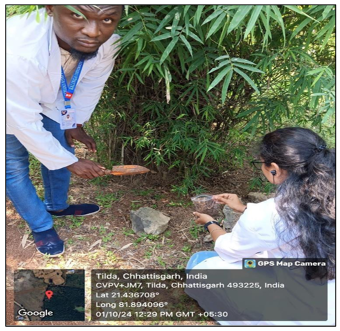
Data collection During the Educational Field
Event - Excursion-cum-Industrial Visit to Shree Dhanwantari Herbals, Amritsar, Punjab
Location- Shree Dhanwantari Herbals, Nag Kalan, Majitha Road, Amritsar, Punjab.
Date of the Event- The educational excursion conducted from 28 December 2024 to 8 January 2025
No. of Participants- 74 students from the Department of Biotechnology, accompanied by faculty members.
Programme Objective- To provide students with practical exposure to Ayurvedic medicine manufacturing, herbal resource management, quality control, research and development, sustainable production practices and industrial operations while enhancing their understanding of the integration of traditional Ayurvedic knowledge with modern biotechnology.
Programme Description- The Department of Biotechnology organized an excursion-cum-industrial visit to Shree Dhanwantari Herbals to provide experiential learning in the field of herbal medicine manufacturing. During the visit, students observed the complete production process, including raw material selection, processing, quality testing, packaging and distribution of Ayurvedic products. They also gained insights into ISO 9001:2015 and GMP-certified manufacturing practices, research and development activities, regulatory compliance, sustainable sourcing of medicinal plants and career opportunities in the biotechnology and herbal pharmaceutical sectors. The programme successfully combined industrial exposure with educational and nature-based learning enriching students' practical understanding of biotechnology and the Ayurvedic pharmaceutical industry.
Coordinator(s)
Dr. Sushma Dubey, Head, Department of BiotechnologyMr. Sangram Keshari Samal, Assistant Professor, Department of Biotechnology
Certificate of the Industrial VisitPhotos


During Visit to the Campus







Kalinga University incorporates green spaces and vegetated areas into local site planning and development to support environmental quality and biodiversity. The landscaped area at Ram Chowk, maintained by Kalinga University, demonstrates the integration of vegetation and green cover within the developed roadside environment. Such planted and maintained spaces help provide habitat for local flora and fauna, improve landscape connectivity, reduce environmental stress and contribute to the conservation of urban and peri-urban biodiversity. Through the maintenance of these green areas, the University promotes environmentally responsible development while enhancing the ecological value of the surrounding landscape.

Ram Chowk, Naya Raipur


Name of the Event: Poster Making Competition on World Environment Day
Date of the Event: 05 June 2025
Location: Convention Hall & Big Conference Hall, New Circuit House, Civil Line, Raipur (C.G.)
Organizing Agency: Chhattisgarh Environment Conservation Board
Coordinators
Mr. Sheikh Abdul Kadir, Deputy Dean of Students' WelfareMs. Nikita Joshi, Assistant Dean of Students' Welfare
Number of Participants
Total Participants: More than 300
Kalinga University Participants: 06 Students
Programme Objectives
The competition was organized to create awareness about the adverse effects of plastic pollution and to encourage participants to express innovative and sustainable solutions through creative artwork. The event aimed to promote environmental consciousness and responsible environmental behaviour among students and the community.
Programme Description
On the occasion of World Environment Day 2025, the Chhattisgarh Environment Conservation Board organized a Poster Making Competition on the theme “Plastic Pollution – Side Effects & Solutions.” The event was conducted offline at the Convention Hall and Big Conference Hall, Raipur.
More than 300 participants from different age groups registered and participated in the competition. Through their posters, participants effectively highlighted the environmental and health hazards caused by plastic pollution and suggested practical measures to reduce plastic waste and promote sustainable alternatives.
The programme was graced by Mr. P.C. Pandey, Chairman of the State Level Expert Evaluation Committee and Retired Indian Forest Officer who appreciated the creativity and environmental awareness demonstrated by the participants. Officials from the Chhattisgarh Environment Conservation Board were also present during the event.
Six students from Kalinga University actively participated under the guidance of the Department of Students' Welfare, showcasing the university’s commitment towards environmental sustainability and social responsibility.
Programme Outcomes

Related Sustainable Development Goals (SDGs)
Poster Making CompetitionPoster Making CompetitionSDG 4 – Quality EducationSDG 12 – Responsible Consumption and ProductionSDG 15 – Life on LandSDG 17 – Partnerships for the Goals
Sample Posters in the CompetitionPoster Making CompetitionParticipants in the Poster Making CompetitionPoster Making Competition


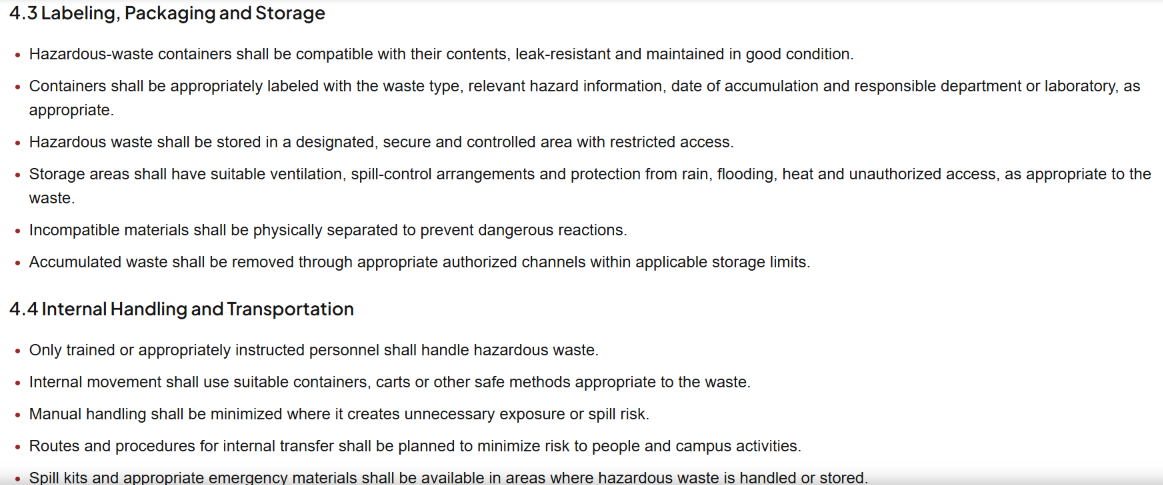
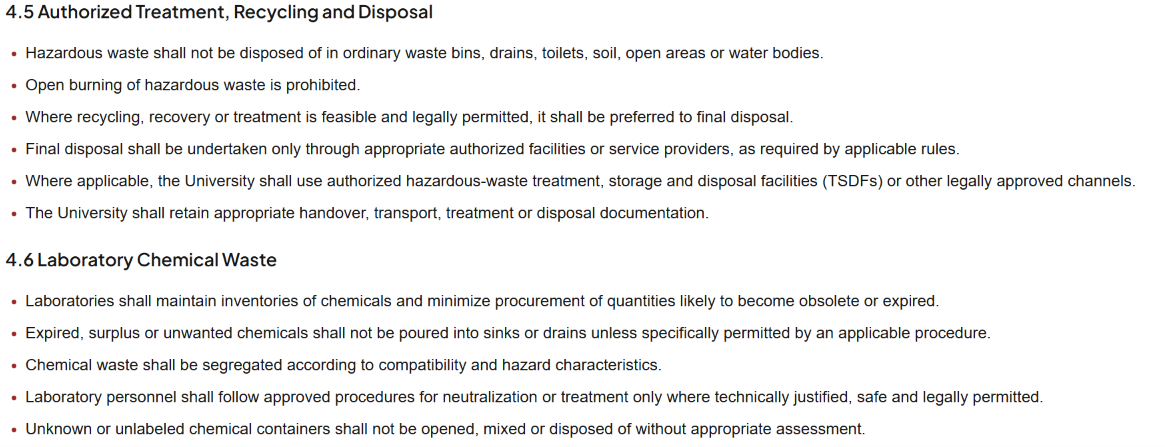


Water Discharge Guidelines and Standards


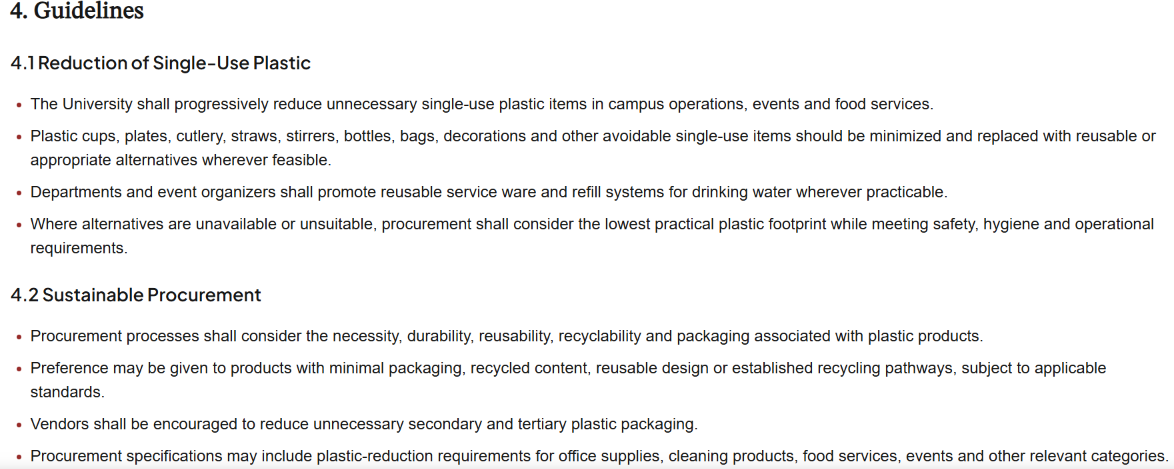


Kalinga University is committed to the safe, responsible and environmentally sound management of hazardous waste generated on campus. The policy covers the identification, segregation, collection, storage, transportation, treatment and final disposal of hazardous waste. Hazardous waste from laboratories, workshops, healthcare facilities, maintenance activities and other campus operations shall be handled carefully. Different categories of hazardous waste shall be segregated at the point of generation to prevent unsafe mixing and contamination. Waste containers shall be properly labelled, securely closed and stored in designated areas with appropriate safety precautions. Hazardous chemicals, used laboratory reagents, contaminated materials, oils, solvents and other hazardous substances shall be managed according to their nature and risk. The University shall ensure that hazardous waste is not discharged into drains, soil, water bodies or general waste streams Where applicable, hazardous waste shall be transferred only to authorized waste management agencies or approved treatment and disposal facilities. Records of hazardous waste generation, storage, transportation and disposal shall be maintained for monitoring and regulatory compliance. Students, faculty, laboratory staff, housekeeping personnel and other relevant employees shall receive appropriate training on hazardous waste handling and emergency procedures.
Policy-