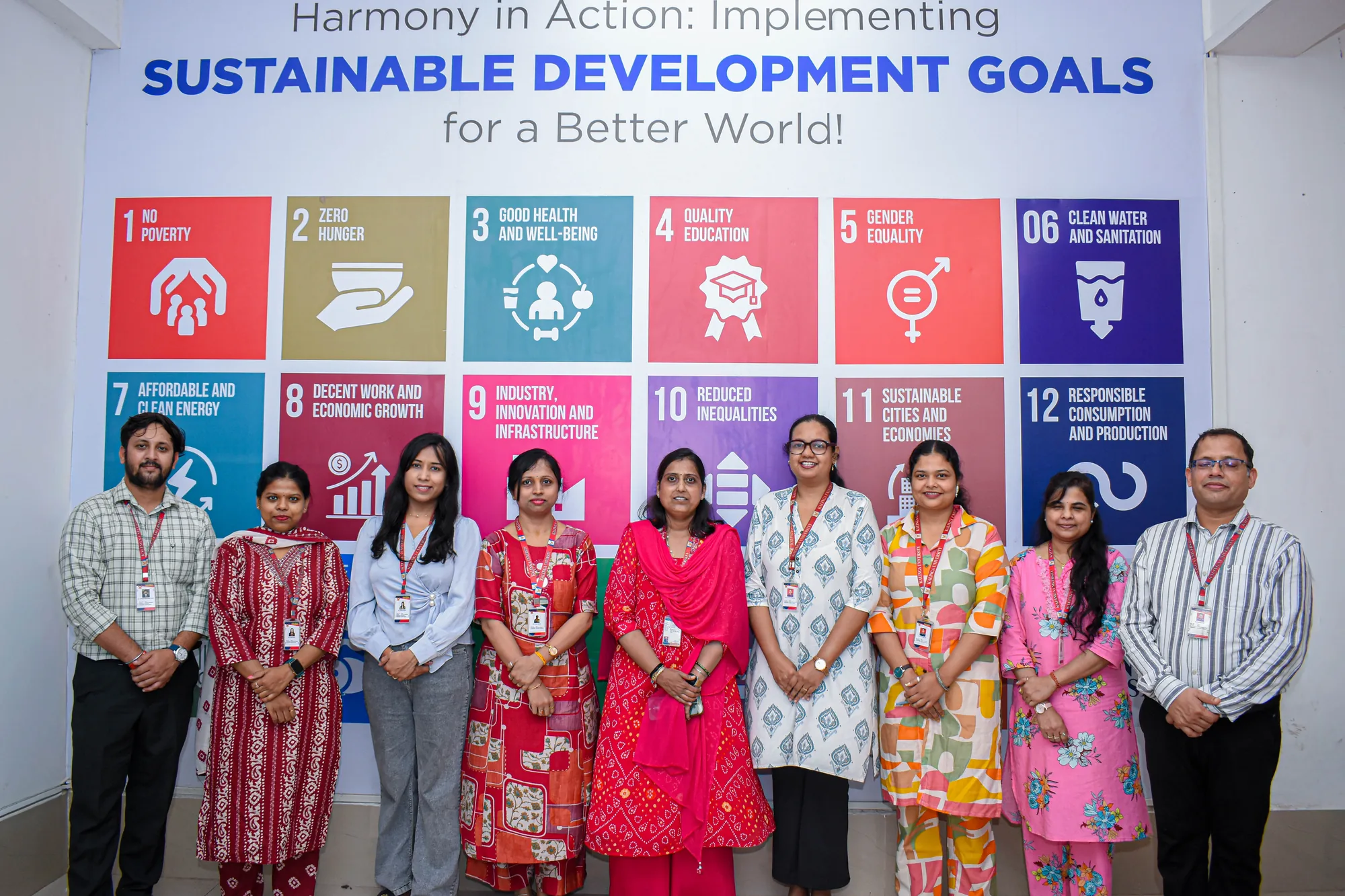
SDG 8: Decent Work and Economic Growth Report

Loading
Admissions Closing Soon for 2026-27
Apply NowKalinga University promotes inclusive economic growth by providing quality education, skill development, internships, entrepreneurship opportunities, and industry-oriented training. The University encourages innovation, employability, startups, and professional development through industry collaborations, placement initiatives, incubation support, and career guidance. These initiatives enhance students’ skills, create employment opportunities, and contribute to sustainable livelihoods and regional economic development.

SDG 08 Related Publications (2024-25)
Cumulative SDG 08 Related Publications
Field-Weighted Citation Impact (FWCI)
Citation Count
Total Expenditure (2024-25)
Employee Benefit Expenditure (2024-25)
Expenditure on Research Publication Reward
Events & Activities related to SDG 8 (Employee Training, FDP, and other development programs)
Events (Workshop, Guest Lectures, Career Guidance, Start-up & innovation related)
Expenditure Per Employee
Kalinga University’s research portfolio contributes to SDG 8: Decent Work and Economic Growth through scholarly research addressing sustainable economic development, employment generation, industrial innovation, entrepreneurship, and productivity. The portfolio comprises 136 Scopus-indexed publications with 328 citations, demonstrating research visibility and academic engagement. All publications have received citations, reflecting consistent scholarly reach. The Field-Weighted Citation Impact (FWCI) of 1.12 indicates citation performance 12% above the global average, supporting knowledge creation relevant to inclusive and sustainable economic growth.
SDG 8 – Decent Work and Economic Growth: Research Output (2020–2025)
During 2020–2025, research aligned with SDG 8: Decent Work and Economic Growth demonstrates a strong focus on smart technologies, sustainable energy, industrial transformation, agriculture, finance, and digital commerce. As shown in the research analysis, 20 major thematic areas were identified, accounting for a total of 270 research-paper occurrences. The highest contributions were observed in Smart City (24), Renewable Energies (23), Smart Power Grids (19), Investments (18), Industry 4.0 (18), Smart Grid (17), Smart Manufacturing (16), Sales (16), and Commerce (16). Other significant areas include Smart Agriculture and Precision Agriculture (14 each), Financial Markets and Costs (13 each), Solar Power Generation (11), Economics (8), Urban Growth, Smart Farming and Decentralized Finance (7 each), E-Commerce (5), and Stock Market Prediction (4). Collectively, these research areas contribute to technological innovation, productivity, sustainable economic development, digital transformation, financial inclusion, and employment-oriented growth, supporting the objectives of SDG 8.
These research themes demonstrate the University's contribution to technological innovation, sustainable infrastructure, digital transformation, financial development, and employment-oriented economic growth under SDG 8.

Graph: The horizontal bar graph below presents the 20 major research thematic areas associated with SDG 8: Decent Work and Economic Growth, covering all 270 research-paper occurrences.
The below mentioned graph presents the year-wise number of research papers published in alignment with SDG 8: Decent Work and Economic Growth. Publications increased from 13 in 2023 to 63 in 2025, indicating substantial growth in faculty research productivity and contributions to sustainable economic development.
Year
Figure: Year-wise Research Papers aligned with SDG 08
Graph: Year-wise Research Publications Related to SDG 8: Decent Work and Economic Growth (2021–2025)
Below mentioned graph illustrates the year-wise number of books and book chapters published per teacher in alignment with SDG 8: Decent Work and Economic Growth. Publications increased from 26 in 2021 to 120 in 2025, despite fluctuations, demonstrating growing faculty contributions to research, knowledge dissemination, and sustainable economic development.
Year of Publication
Graph: Year-wise Book / Book Chapters per Teacher Related to SDG 8: Decent Work and Economic Growth (2021–2025)
Kalinga University, Raipur, is committed to fair, transparent, and inclusive employment practices that promote employee welfare and professional growth. The University follows merit-based recruitment, an Equal Opportunity Policy, and non-discriminatory employment practices. Its employment framework encompasses a structured salary system, increment and performance appraisal policies, leave provisions, and applicable employment benefits. A feedback and complaints redressal mechanism supports employees in raising workplace concerns and seeking appropriate resolution. The University also encourages professional development through training programmes and capacity-building initiatives while striving to maintain a safe, respectful, and supportive work environment. These practices promote employee satisfaction, institutional accountability, and SDG 8: Decent Work and Economic Growth.
| Sl. No. | Workforce Indicator | Year 2024-25 |
|---|---|---|
| 1 | Total Number of Employees | 641 |
| 2 | Total Expenditure | 8300.31 Lakhs |
| 3 | Total Employee Benefit Expenditure | 100.70 Lakhs |
Employment Welfare at Kalinga University, Raipur
Kalinga University, Raipur, is committed to promoting employee welfare through a structured Human Resource (HR) Manual that emphasizes fairness, inclusivity, professional development, and employee well-being. The University provides a range of welfare measures designed to support the personal and professional needs of its teaching and non-teaching staff.
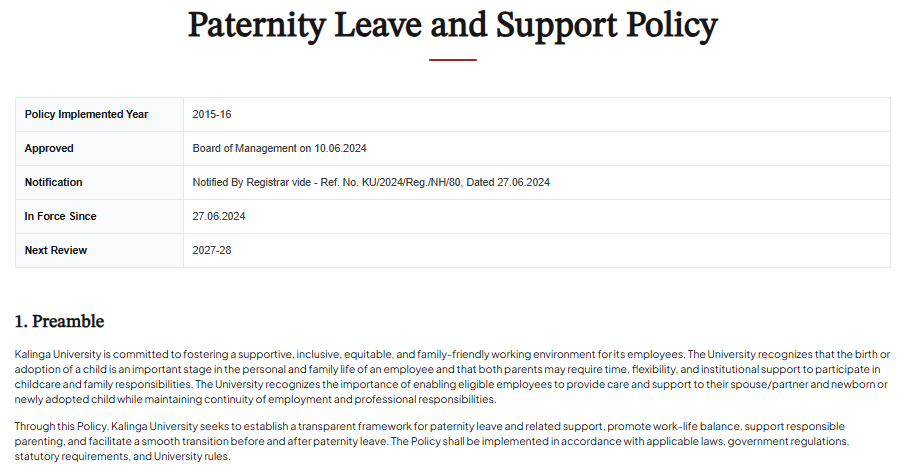
The University’s Leave Policy provides various leave facilities, including casual leave, earned/medical leave, special leave, maternity leave, paternity leave, semester breaks, and compensatory duty leave, subject to applicable eligibility conditions and university rules. These provisions support work-life balance and help employees manage personal and family responsibilities.
Under its Employee Gift Policy, eligible confirmed employees may receive gifts on specified occasions, including their own marriage, the birth of a child, and their child’s marriage. The Interest-Free Loan Policy offers eligible employees financial assistance for specified needs, such as medical emergencies involving themselves or eligible family members and children’s education, subject to management approval and repayment conditions.
Kalinga University also encourages career progression through its Annual Increment Policy, Special Increment Policy, and promotion provisions. Faculty performance is assessed through academic contributions, research publications, professional development, and institutional responsibilities. Eligible employees may receive increments or promotions for specified qualifications and achievements. The University’s Research, Consultancy and Intellectual Property Rights Policy, Seed Money Policy, and Travel Policy further support research engagement and official professional activities.
Additionally, the Equal Opportunity Policy promotes dignity, fairness, inclusion, and freedom from discrimination, harassment, bullying, and victimisation. The HR Manual also establishes grievance-redressal mechanisms, including the Internal Complaints Committee and University Grievance Redressal Committee.
Through these policies, Kalinga University strives to foster a supportive, equitable, and professionally enriching workplace.
The HR Manual of Kalinga University covers employee welfare measures and other employment practices, including leave facilities, employee benefits, increments, promotions, equal opportunity, grievance redressal, and professional development. It provides a structured framework for managing employee-related matters and promoting fairness, inclusivity, well-being, and professional growth among teaching and non-teaching staff. Through these policies and procedures, the University aims to maintain a supportive, transparent, and equitable working environment.
Human Resource (HR) Manual of Kalinga University, Raipur – Framework for Employee Welfare, Employment Practices, Benefits, Equal Opportunity, and Professional Development.


Kalinga University is committed to providing a fair, inclusive, and respectful workplace through its Employment Non-Discrimination Policy. The policy promotes equal employment opportunities and prohibits discrimination in recruitment, employment, and professional development. It encourages a culture of dignity, fairness, and mutual respect for all employees, irrespective of gender or other protected characteristics, in accordance with applicable laws and institutional regulations.
This policy has been in effect since the academic year 2015–16, and the next review scheduled for the academic year 2027–28.


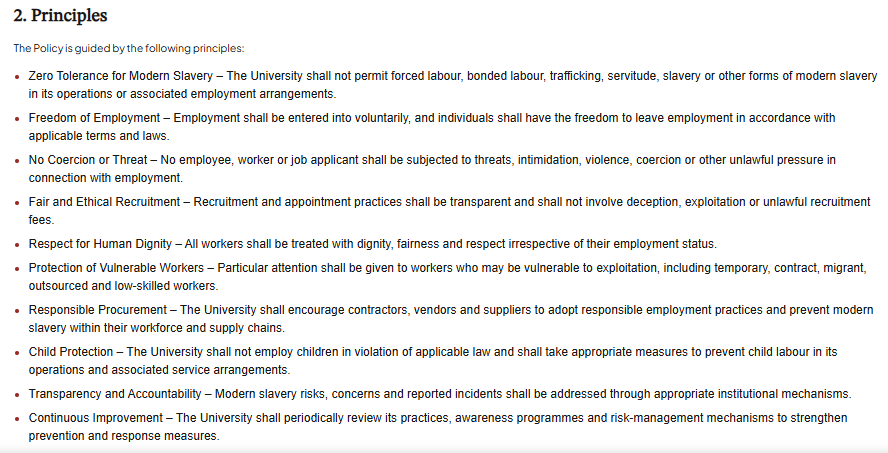
Kalinga University is committed to preventing modern slavery, forced labour, human trafficking, and all forms of workplace exploitation. The Policy Against Modern Slavery in Employment promotes a safe, ethical, respectful, and inclusive working environment, safeguarding employees’ dignity, freedom, and fair treatment. The policy has been in effect since the academic year 2015–16 and is scheduled for its next review in 2027–28 to ensure continued relevance, effective implementation, and compliance with applicable laws and institutional regulations.

Kalinga University is committed to promoting equivalent rights and fair employment practices for outsourced personnel. The University aims to ensure that outsourced employees are treated with dignity, fairness, and respect, without discrimination. Employment-related practices are guided by applicable rules, contractual conditions, and institutional procedures. The University encourages a safe, inclusive, and respectful working environment, supporting equitable treatment and responsible employment practices for outsourced staff alongside its regular workforce.


Kalinga University is committed to promoting pay scale equity through fair, transparent, and structured compensation practices. Salary determination is guided by applicable university policies, employee designations, qualifications, experience, responsibilities, and relevant regulatory norms, wherever applicable. The University aims to ensure equitable remuneration, consistency in compensation, and equal opportunities for career progression. Through established HR procedures, it strives to maintain fairness, recognize employee contributions, and foster a supportive and inclusive working environment.


Kalinga University maintains an institutional Human Resource (HR) Manual and related procedures that provide a structured framework for managing employee remuneration and employment conditions. The University is committed to fair compensation, equal opportunity, and equitable treatment of male and female employees. Salary structures are determined by relevant factors, including designation, qualifications, experience, responsibilities, and applicable policies.
As part of its commitment to gender equity, the University may review remuneration data across male and female faculty and staff categories to identify potential pay disparities. Where unexplained differences are identified, appropriate reviews and corrective measures may be undertaken in accordance with university policies and applicable regulations.
These practices support the University’s commitment to SDG 5 – Gender Equality and SDG 8 – Decent Work and Economic Growth, promoting fair employment, equal opportunities, and gender-equitable remuneration.


Promoting Fairness, Inclusion, Non-Discrimination, and Equal Rights for Every Employee through the Institutional HR Manual.
Kalinga University, Raipur, is committed to maintaining a fair, transparent, and inclusive working environment through an established grievance redressal and appeal mechanism. The University provides channels for employees to raise concerns and seek review of workplace matters, including harassment, discrimination, professional conduct, employment conditions, and other service-related issues. Dedicated committees and designated authorities address grievances in accordance with applicable university policies and procedures, ensuring impartial consideration and appropriate resolution.
The University also utilizes its ERP System to facilitate the submission, recording, tracking, and follow-up of employee grievances, where applicable. This system supports systematic documentation, improved communication, and greater transparency in the grievance-handling process. Employees can seek clarification, submit concerns, and pursue appropriate review through the prescribed institutional channels. These practices reflect the University’s commitment to employee welfare, accountability, and fair employment practices, supporting SDG 8 – Decent Work and Economic Growth by promoting a respectful, safe, and equitable workplace.
Kalinga University, Raipur – ERP System for Feedback and Complaints: A Digital Platform for Submitting, Tracking, and Addressing Feedback, Employee Grievances, and Complaints, Promoting Transparency, Accountability, and Continuous Institutional Improvement.

Kalinga University is committed to providing a safe, respectful, and harassment-free workplace for all staff members through its Anti-Harassment Policy. The policy promotes dignity, equality, and non-discrimination, with mechanisms for reporting and addressing complaints through designated committees and institutional procedures. The University strives to ensure confidentiality, fairness, and appropriate action in accordance with applicable policies and regulations.


Kalinga University, Raipur, is committed to respecting the labor rights of its employees and promoting fair, inclusive, and respectful employment practices in accordance with applicable laws, regulations, and institutional policies.
The University’s Human Resource (HR) Manual and related employment procedures provide a framework for protecting employee rights, ensuring equitable treatment, and enabling staff members to raise employment-related concerns through established grievance redressal mechanisms. The University strives to maintain a workplace free from discrimination, unfair treatment, harassment, and retaliation for exercising legitimate employment rights. University encourages constructive communication between employees and the administration and supports fair opportunities for staff participation in recognized employee representation mechanisms, where applicable. These principles contribute to responsible human resource management, employee welfare, and a positive working environment.
Through these commitments, the University supports SDG 8 – Decent Work and Economic Growth, particularly the promotion of decent working conditions, workers’ rights, equal opportunity, and fair employment practices.


Human Resource (HR) Manual of Kalinga University, Raipur – A Comprehensive Framework for Staff Service Rules, Code of Conduct, Professional Ethics, Staff Welfare Policies, Best Practices, Employee Responsibilities, and Institutional Employment Procedures.
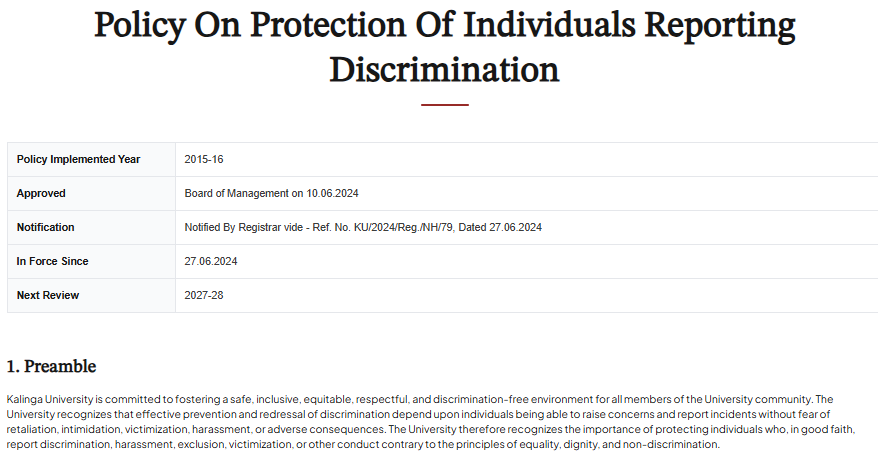
Kalinga University, Raipur, is committed to protecting employee rights and promoting a fair, inclusive, and supportive working environment through its institutional policies on labour rights and employee welfare. The University has established policies such as the Maternity Leave and Support Policy, Paternity Leave and Support Policy, and Policy for the Protection of Individuals Reporting Discrimination. These policies provide an institutional framework for supporting employees during important family-related circumstances and encouraging the reporting of discrimination without fear of unfair treatment. They reflect the University’s commitment to employee well-being, gender equity, dignity, and non-discrimination. Through these measures, Kalinga University strives to strengthen responsible employment practices, support work–life balance, and promote a respectful workplace for its staff. These initiatives align with SDG 5 – Gender Equality and SDG 8 – Decent Work and Economic Growth, supporting inclusive employment and the protection of employees’ legitimate rights.

Employee Training and Development
Facilitating Learning and Development at Kalinga University
List of Activities regarding Employee Training and Development
| Sl. No. | Date of Event | Event Category | Title of the Event | Aligned SDG Goal(s) | Remarks |
|---|---|---|---|---|---|
| 1 | 12.07.2024 - 14.07.2024 | Conference | 2nd World Conference on Communication & Computing 2024 (2nd WCONF - 2024) | SDG 9, SDG 17 | Technology, research and collaboration |
| 2 | 22.07.2024 to 27.07.2024 | FDP / Faculty Development | One Week Faculty Development Program (Online) on “Advanced Teaching Pedagogy and Research” | SDG 4 | Faculty capacity building and quality education |
| 3 | 17.08.2024 | Master Class / Professional Development | Master class on “Grow as a Leader: A Program for First-time managers” | SDG 4, SDG 8 | Leadership and employability |
| 4 | 23.08.2024 | Seminar / Innovation | Seminar on “From Idea to Impact: Translating Innovation into Market Success” | SDG 8, SDG 9 | Innovation and entrepreneurship |
| 5 | 13.09.2024 | Seminar / Leadership | Session on “AI Leadership: The Future of Management” | SDG 4, SDG 8, SDG 9 | AI, leadership and innovation |
| 6 | 09.09.2024 to 24.09.2024 | FDP / Faculty Development | (Online) FDP on “The Role of Research and Higher Education in the Growth of Small and Medium Enterprises” | SDG 4, SDG 8, SDG 9 | Research, entrepreneurship and innovation |
| 7 | 05.10.2024 to 14.10.2024 | Certificate Course | Two-Week Advanced Certificate Course on “Understanding New Criminal Laws: A Focus on New Legislative Changes” | SDG 4, SDG 16 | Legal education and justice |
| 8 | 15.10.2024 | Seminar | National Seminar on Bioinformatics and Applied Science | SDG 3, SDG 4, SDG 9 | Health science and technology |
| 9 | 19.10.2024 | Training / Quality Assurance | Quality Assurance in HEIs: NAAC, NBA, CO/PO Mapping | SDG 4, SDG 16 | Quality education and institutional governance |
| 10 | 24.10.2024 to 26.10.2024 | Certificate Course | Three Days Online Certificate Course on “Contract Drafting” | SDG 4, SDG 16 | Legal skills and justice |
| 1 | 30.01.2025 | Seminar / Webinar | Pharmacy-National Seminar/Webinar | SDG 3, SDG 4, SDG 9 | Health education and research |
| 12 | 27.01.2025 to 01.02.2025 | FDP / Faculty Development | One week FDP on “Digital Library and Repository Management” | SDG 4, SDG 9 | Digital education infrastructure |
| 13 | 11.01.2025 to 02.02.2025 | Certification / Capacity Building | Trainers' Training Certification Course on POSH Act, 2013 | SDG 5, SDG 16 | Gender safety and institutional justice |
| 14 | 13.02.2025 | Certificate Program | Certificate Program on Ecommerce | SDG 4, SDG 8, SDG 9 | Digital commerce and employability |
| 15 | 21.02.2025 & 22.02.2025 | International Conference | Two Days International Conference On “Innovative Management Techniques for Sustainable Development (IMTSD-2025)” | SDG 8, SDG 9, SDG 12, SDG 17 | Sustainable management and partnerships |
| 16 | 22.02.2025 | Cultural / Language Programme | EK BHARAT SHRESTHA BHARAT AND HIS CONTRIBUTION TO CLASSICAL INDIAN (TAMIL) LANGUAGE | SDG 4, SDG 11, SDG 17 | Culture, language and partnership |
| 17 | 27.02.2025 & 28.02.2025 | International Conference | Two Days ICSSR Funded International Conference | SDG 4, SDG 9, SDG 17 | Research and collaboration |
| 18 | 28/02/2025 to 01/03/2025 | Global Conference | Two-Days Global Conference On “RECENT TRENDS IN LAW, ARBITRATION, MEDIATION, ECONOMY AND SOCIETY” | SDG 16, SDG 17 | Justice, governance and collaboration |
| 19 | 21.03.2025 and 22.03.2025 | National Conference | National Conference on “Viksit Bharat@2047: Progress and Development” | SDG 8, SDG 9, SDG 11, SDG 17 | Development and partnerships |
| 20 | 25.03.2025 and 26.03.2025 | International Conference | International Conference on “Emerging Perspectives and Future Trends in Pharmaceutical and Allied Sciences for Global Health and Well-Being” | SDG 3, SDG 4, SDG 9 | Health, research and innovation |
| 21 | 27.03.2025 and 28.03.2025 | International Conference | International Conference on “Emerging Technologies for Sustainable Innovation, Management, and Development (ICETSIMD 2025)” | SDG 4, SDG 9, SDG 11, SDG 17 | Sustainable technology and collaboration |
| 2 | 28.03.2025 and 02.04.2025 | Training / Entrepreneurship | Training Programme on Entrepreneurship Development | SDG 4, SDG 8, SDG 9 | Entrepreneurship and employability |
| 23 | 11.04.2025 | Seminar / Entrepreneurship | Seminar on “Innovation for Impact: Institutional Business plan Contest & Yukti Repository Recognition” | SDG 8, SDG 9 | Innovation and entrepreneurship |
| 24 | 15.04.2025 | Workshop / IPR | Workshop on IPR, Patents, and Design Filing | SDG 4, SDG 9 | Innovation and IP skills |
| 25 | 17.04.2025 | Seminar / Quality | Seminar on “Six Sigma” | SDG 4, SDG 8, SDG 9 | Quality and process improvement |
| 26 | 17.04.2025 to 18.04.2025 | International Conference | International Conference on Emerging Technologies for Sustainable Development (ICETSD-2025) | SDG 9, SDG 11, SDG 12, SDG 13, SDG 17 | Sustainable technology and partnerships |
| 27 | 11.04.2025 to 19.04.2025 | Certification Course | Advanced Certification Course | SDG 4, SDG 16 | Advanced professional/legal education |
| 28 | 15.04.2025 to 22.04.2025 | Skill Development Workshop | Skill Development Workshop | SDG 4, SDG 8 | Skills and employability |
Glimpses of the Events:


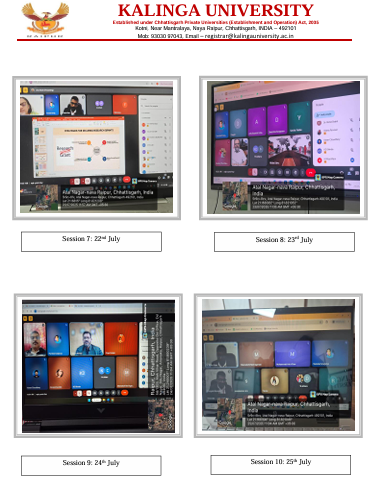

Two-Week Online Faculty Development Programme (FDP) On Emerging Trends in Research and Innovative Teaching Pedagogy, 14th July-27th July 2025


The International Conference on Smart Technologies and Digital Transformation for Sustainable Development (ICSTDTSD 2025), 30th and 31st October, 2025.


6-Days AICTE sponsored FDP “AR/VR/MR: Differences & Its Application Areas” was conducted from 06th to 11th October 2025


| Sl. No. | Particulars | Count |
|---|---|---|
| 1 | Total Number of Employees | 641 |
| 2 | Teaching Staff | 421 |
| 3 | Non - Teaching Staff | 220 |
| 4 | Number of Employees on Contracts of Over 24 Months | Nil |
List: Workshop, Guest Lectures, Career Guidance, Start-up, Innovation & Other Events)
| Sl. No. | Event Title | Date | Organizing Department | No. of Participants | Outcome of the Programme |
|---|---|---|---|---|---|
| 1 | Guest Lecture on Innovation/Prototype Validation – Converting Innovation into a Start-up | 29.08.2025 | The Marketing Club “Mercadeo” Faculty of Commerce and Management, in collaboration with Institution's Innovation Council | 105 | Real-time marketing exposure and skill-building. Networking opportunities with industry experts and alumni. Leadership development through club roles. Certificates and recommendations for active members. Portfolio development for placements and higher studies. |
| 2 | “An Industrial Visit to Parle G Plant in Raipur” | 04.10.2024 | Faculty of Commerce and Management | 166 | The industrial visit to Parle-G enhanced students’ understanding of biscuit manufacturing, from raw material handling to packaging. Participants gained insights into quality control, food safety standards, supply chain management, and logistics. The visit also highlighted sustainable manufacturing practices, resource optimisation, and innovation, bridging theoretical knowledge with practical industrial applications and industry-oriented learning. |
| 3 | “Workshop on ITR E-Filing | 20.08.2025 | Finance Club-Bull Faculty of Commerce and Management | 63 | Practical Skills: Students learned the end-to-end ITR filing process using the government portal. Awareness of Tax Compliance: Enhanced knowledge of legal and financial responsibilities as future professionals. Skill Development: Students developed skills relevant for employability in finance, banking, taxation, and entrepreneurship. |
| 4 | Seminar On Angel Investment /VC Funding Opportunity for Early-Stage | 29.08.25 | Department of CS & Faculty of IT in the Collaboration with Institution's Innovation Council & Infinity Club” | 135 | The initiative supports startups through funding, expert mentorship, networking, and investor-readiness development. It accelerates product development, market expansion, and job creation while enhancing business credibility and sustainability. By promoting innovation, entrepreneurship, and inclusive economic opportunities, it contributes to SDG 8: Decent Work and Economic Growth and long-term economic development. |
| 5 | “Industrial Visit” | 26.09.2025 | Department of CS & Faculty of IT | 45 | The programme enhanced students’ understanding of practical software development concepts, industry tools, and methodologies. It provided exposure to real-world projects, teamwork, coding, testing, and deployment practices. Students strengthened their technical, analytical, and problem-solving skills, interacted with industry professionals, explored emerging technologies, and gained valuable insights into internships, career opportunities, and future employment. |
| 6 | Trainers’ Training Certification Course on RTI Act, 2005, | 20 to 11.10.2025 | “Faculty of Law, Kalinga University, Naya Raipur, Chhattisgarh” | 24 | Creation of a trained pool of RTI educators and facilitators. Enhanced understanding of transparency and accountability mechanisms in governance. Strengthened institutional capacity for promoting RTI awareness. Empowerment of participants to independently conduct RTI sensitization and training programs. |
| 7 | Business Plan and Entrepreneurship Lecture | 28.08.2025 | “Faculty of Science” In Association with “Institution's Innovation Council (IIC)” | 187 | The event successfully educated participants about entrepreneurship and innovation, facilitated networking and potentially inspired future entrepreneurial ventures. The event achieved the following potential outcomes: Enhanced understanding of entrepreneurship in science. Developed entrepreneurial skills. Improved business planning and strategy development. Improved creativity and innovation. Networking opportunities. Inspiration and motivation. Practical knowledge and application. Interdisciplinary learning. |
| 8 | A session on “Career Guidance & Start-ups” | 17.11.2025 | Department of Biotechnology | 120 | Recognize diverse career opportunities across research, industry, healthcare, environmental biotechnology, and entrepreneurship in the biotechnology sector. Develop an understanding of the startup ecosystem, including business ideation, funding avenues, incubation, and regulatory requirements relevant to biotech ventures. Acquire essential career skills such as scientific communication, networking, problem-solving, and entrepreneurial thinking to enhance professional growth and employability. |
| 9 | Guest Lecture on “IPR Basics for Innovators & Entrepreneurs” | 19/11/2025 | Faculty of Science | 133 | Understanding Intellectual Property Rights: Participants understood the key concepts and types of intellectual property rights (patents, trademarks, copyrights, designs) relevant to innovation and entrepreneurship. IPR Protection and Management: Students acquired knowledge to identify, protect, and manage intellectual property assets, including knowledge of patent filing and trademark registration processes. Legal and Ethical Awareness: Learners develop awareness of the legal and ethical considerations in IPR, including recognizing infringement and respecting third-party intellectual property. |
| 10 | Industrial Visit to VNR SEEDS PVT. LTD. Corporate Centre, Canal Road Crossing, Ring Road No.1, Raipur, Chhattisgarh | 28.11.2025 | Department of Botany, Microbiology and Bioinformatics | 25 | Students gained practical insights into seed breeding, hybrid development, crop improvement, industrial seed processing, and quality control. They understood the application of biotechnology and research principles, explored sustainable agricultural innovations, and recognized the role of quality seeds in food security, climate resilience, improved productivity, teamwork, communication, and professional skill development. |
| 1 | WOVEN SHAWL WORKSHOP | 17.03.2026 | Department of Fashion Design | 12 | Participants acquire basic weaving and shawl-making skills. Improved technical understanding of handloom processes. Enhanced knowledge of textile traditions and design principles. Ability to translate concepts into practical textile products. Exposure to income-generating opportunities in handloom and crafts. Encouragement towards self-employment and entrepreneurship. Strengthened community engagement and collaborative learning. Promotion of women empowerment and participation in crafts. Awareness of eco-friendly materials and sustainable production. |
| 12 | Workshop on “Entrepreneurship and Careers in Forensic Science” | 07.10.2025 | Department of Forensic Science | 8 | Students gained awareness of emerging entrepreneurial opportunities within forensic and allied sectors. The session enhanced understanding of professional skills, innovation, and research-driven career growth. Participants learned about start-up possibilities, private consultancy, and industrial collaborations in forensic science. The workshop bridged the gap between academic learning and real-world applications, encouraging students to think creatively and strategically. Overall, the session inspired students to build successful, independent careers while contributing to advancements in the field of forensic science. |
| 13 | Embroidery & Quilting Workshop | 07.10.2025 | Department of Fashion Design In Association with “USHA COMPANY” | 13 | Students will gain practical exposure to modern embroidery and quilting methods. The workshop will foster awareness about sustainable fashion practices and responsible production. It will strengthen industry–academia collaboration, improving employability and technical proficiency of students. |
| 14 | Guest Lecture On “Lean Start Up &Minimum Viable Product/Business Boot Camp or Mentoring Session | 13.08.2025 | Faculty of Technology In Association with “Institutions Innovation Council” | 7 | One of the most significant results were an enhanced understanding of entrepreneurial processes. Students were able to grasp the Lean Start-Up methodology in depth, particularly how the Build-Measure-Learn feedback loop can be applied to minimize risks and improve product-market fit. Another outcome was the real-world relevance of the session, as the examples and success stories shared by the guest speaker connected theoretical concepts with practical application. Students were able to visualize how these strategies work in different contexts, from rural technology initiatives to modern urban start-ups. |
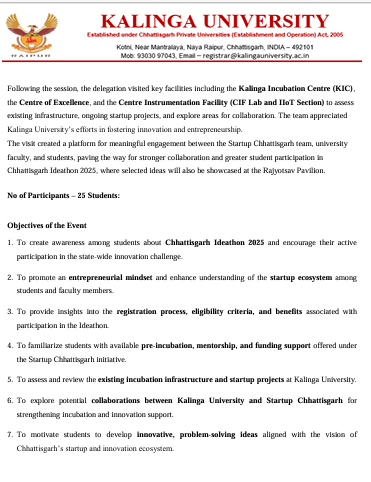
| 15 | Startup India Delegation Visit and Ideathon Awareness Under IIC Activity | 29.10.2025 | “Kalinga Incubation Foundation” CCRC | 25 | The awareness session successfully enhanced students’ understanding of Chhattisgarh Ideathon 2025, its objectives, and participation process. A significant number of students expressed interest in submitting innovative ideas and participating in the Ideathon. The visit strengthened the collaboration between Kalinga University and Startup Chhattisgarh, paving the way for future engagement in entrepreneurship and innovation initiatives.The delegation appreciated the infrastructure and facilities available at the Kalinga Incubation Centre (KIC), Centre of Excellence, and Centre Instrumentation Facility (CIF Lab and IIoT Section). The interaction provided valuable feedback on enhancing incubation practices, mentorship processes, and startup support systems within the university. The event created a motivating environment for students to think innovatively and pursue entrepreneurial ventures. |
Glimpse of above mentioned events:


Guest Lecture on “Innovation/Prototype Validation – Converting Innovation into a Start-up” Organized by the Marketing Club “Mercadeo” Faculty of Commerce and Management, Kalinga University in collaboration with Institution's Innovation Council On 29-08-2025


“An Industrial Visit to Parle G Plant in Raipur” Organized by “Faculty of Commerce and Management” On 4th October 2024


“Workshop on ITR E-Filing” Organized by Finance Club-Bull Faculty of Commerce and Management On 20-08-2025


Seminar On Angel Investment /VC Funding Opportunity for Early-Stage Organized by “Department of CS & Faculty of IT in the Collaboration with Institution's Innovation Council & Infinity Club” On Date: 29/8/25

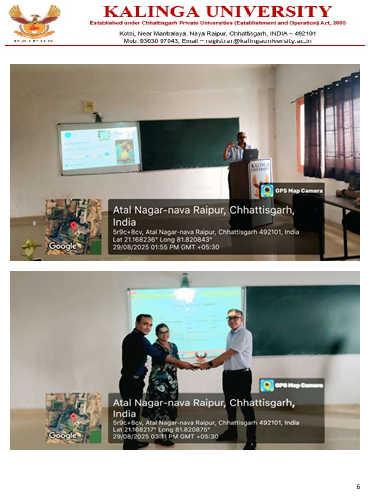


“Industrial Visit” Organized by Department of CS & Faculty of IT Kalinga University, Naya Raipur C.G. On 26th Sep 2025
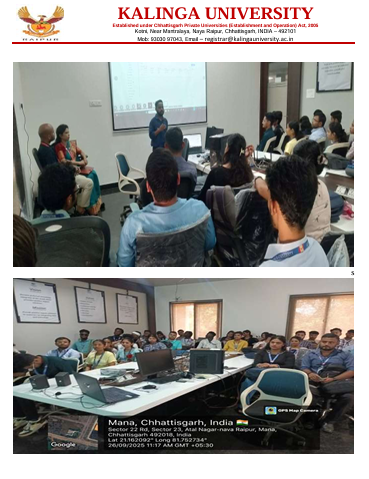


Trainers’ Training Certification Course on RTI Act, 2005, Organized by “Faculty of Law, Kalinga University, Naya Raipur, Chhattisgarh” On Date: 20th September 2025, 27th September 2025, 4th October 2025 and 11th October 2025


Business Plan and Entrepreneurship Lecture, Organized by 4, 8, 9 “Faculty of Science” in Association with “Institution's Innovation Council (IIC)” On Date: 28–08–2025


A session on “Career Guidance & Start-ups” ,Organized by Department of Biotechnology, Kalinga University, Naya Raipur on 17/11/2025


Guest Lecture on “IPR Basics for Innovators & Entrepreneurs” Organized by “Faculty of Science” On 19/11/2025
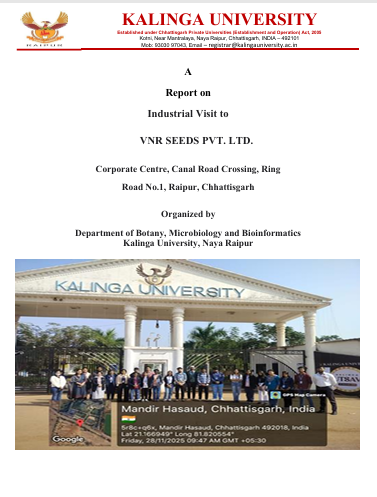


Industrial Visit to VNR SEEDS PVT. LTD. Corporate Centre, Canal Road Crossing, Ring Road No.1, Raipur, Chhattisgarh Organized by Department of Botany, Microbiology and Bioinformatics

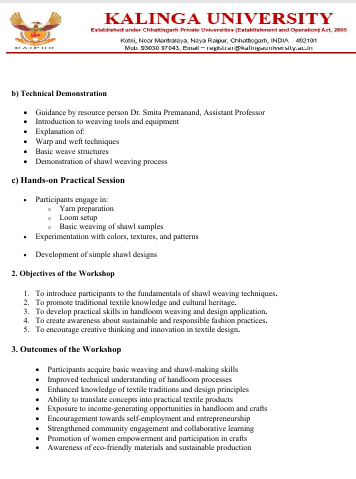
“WOVEN SHAWL WORKSHOP”, Organized by “Department of Fashion Design” on 17th March 2026


Offline Workshop on “Entrepreneurship and Careers in Forensic Science” Organized by Department of Forensic Science, Kalinga University 07th October 2025


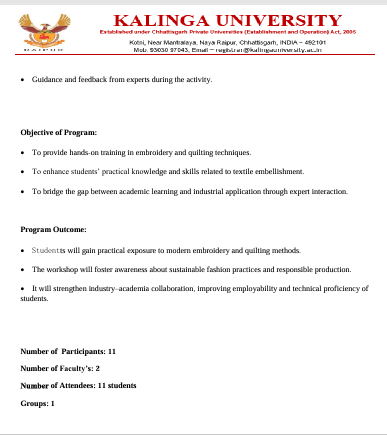

Embroidery & Quilting Workshop, Organized by “Fashion Design Department” In Association with “USHA COMPANY” On Date: 7th October 2025
Guest Lecture On “Lean Start Up &Minimum Viable Product/Business Boot Camp or Mentoring Session” Organized by “Faculty of Technology In Association with “Institutions Innovation Council” On 13.08.2025

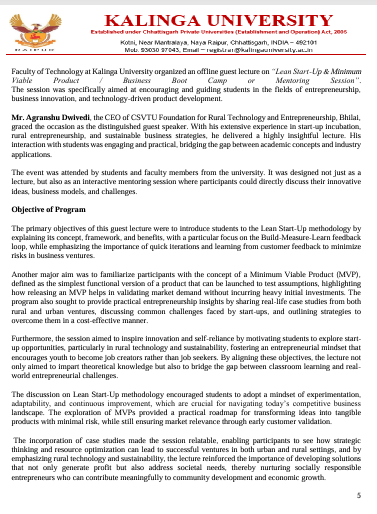


Startup India Delegation Visit and Ideathon Awareness Session at Kalinga University Under IIC Activity Organized “Kalinga Incubation Foundation” On Date: 29th October, 2025