SDG 14: Life Below Water Report

Loading
Admissions Closing Soon for 2026-27
Apply NowSustainable Development Goal (SDG) 14: Life Below Water focuses on the conservation and sustainable use of oceans, seas, rivers, lakes, wetlands and other aquatic ecosystems. While marine environments are central to this goal, freshwater ecosystems such as rivers, ponds, lakes, reservoirs and wetlands are equally critical for maintaining biodiversity, supporting livelihoods, regulating climate and ensuring the availability of clean water. As institutions of higher education, universities play a significant role in protecting these ecosystems through research, education, sustainable campus practices and community engagement.

SDG 14 Related Publications (2024-25)
Cumulative SDG 14 Related Publications
Citation Count
Field-Weighted Citation Impact (FWCI)
No. of Events
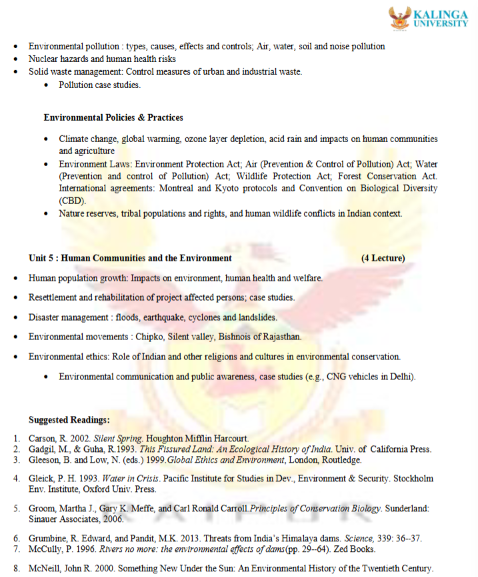
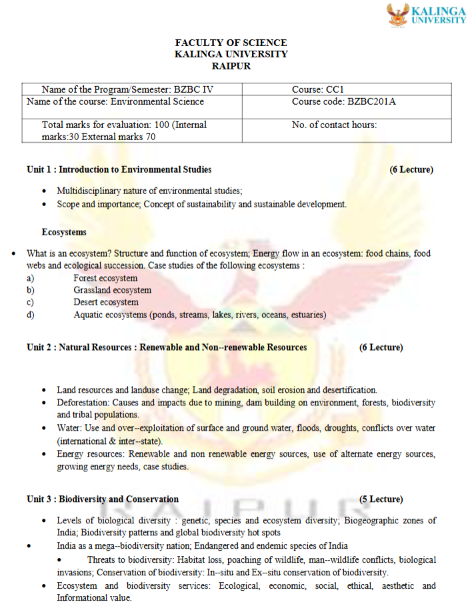
Syllabus includes aquatic ecosystem
Kalinga University actively contributes to the conservation and sustainable management of freshwater ecosystems through interdisciplinary education, research and community engagement. The University promotes awareness and academic initiatives related to water resource management, freshwater conservation, aquatic biodiversity and sustainable environmental practices, with emphasis on protecting water bodies and maintaining the ecological health of freshwater resources. Through field-based learning and research, students are encouraged to understand the importance of rivers, lakes, groundwater and other aquatic ecosystems and to develop responsible approaches towards their conservation and sustainable use.
Name of the Event: Public Awareness on Water Conservation
Location: Offline / Auditorium, Kalinga University Campus
Date of the Event: 26 March 2025
No. of Participants: 96 students and 13 faculty members/representatives from the Ministry of Jal Shakti attended the event.
Programme Objective:
Programme Description: The Department of Zoology of Kalinga University, in association with the Central Ground Water Board, Chhattisgarh, Ministry of Jal Shakti, Govt. of India, organized an offline student awareness program on water conservation. Organized in light of World Water Day's theme, "Glacier Preservation", the program aimed to educate students on groundwater survey methods, quality analysis, the status of groundwater levels in Chhattisgarh, and conservation techniques. Senior Scientists from the Ministry of Jal Shakti, including Dr. Rajni Kant Sharma, Dr. Priyanka Sonbarse, and Dr. Anita, delivered expert lectures on groundwater monitoring, quality analysis, and mitigation strategies. Students from various departments—including Zoology, Botany, Biotechnology, and BBA—attended and participated in slogan writing and extempore competitions, where winners were awarded prizes.
Coordinator(s): Dr. Manoj Singh (Head, Department of Zoology, Kalinga University)
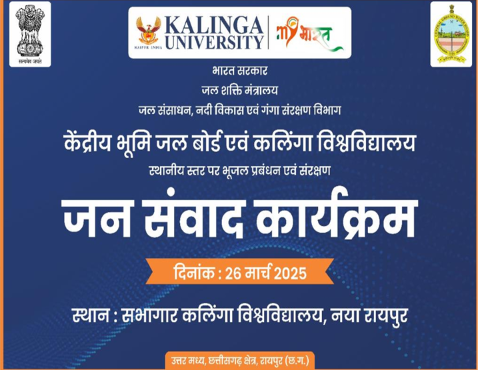

The Brochure and Geo-tagged Photos of the event
Name of the Event: World Water Day Programme on Water Conservation and Glacier Preservation
Location: Auditorium, Kalinga UniversityDate of the Event: 25 March 2025
No. of Participants: 32 students from the Departments of Zoology and Biotechnology, along with 10 faculty and staff members, participated in the programme
Programme Objective:To create awareness about freshwater conservation, water security and sustainable water use. The programme also aimed to enhance students’ understanding of water foot printing, surface and groundwater conservation, and the importance of protecting freshwater resources in the context of climate change.
Programme Description:
Kalinga University organized a World Water Day programme around the theme of “Glacier Preservation,” highlighting the importance of glaciers and freshwater ecosystems. The programme comprised an essay-writing competition and an expert talk by Dr. Rajni Kant Sharma, Scientist C, Central Ground Water Board, Ministry of Jal Shakti, Government of India, Raipur. The session focused on water conservation, water foot printing and the hidden water consumption associated with everyday products. Students also reflected on strategies for conserving surface and groundwater resources and strengthening sustainable water-management practices. The programme enhanced awareness of freshwater conservation and encouraged students to contribute towards sustainable water use and environmental stewardship.
Coordinator(s): Department of Zoology and Microbiologists, Students Unit (MBSI), Kalinga University


The Brochure and Geo-tagged Photos of the event
Kalinga University undertakes academic, awareness and community-oriented initiatives contributing to SDG 14: Life Below Water, with a focus on aquatic ecosystem conservation, water-resource management, biodiversity protection and sustainable practices. Through student engagement, field-based learning and research activities, the University promotes awareness of water pollution, biodiversity loss and the impacts of unsustainable resource use. Students and faculty participate in field studies, environmental awareness programmes and research on water quality, aquatic biodiversity, pollution, watershed management, sustainable fisheries and aquaculture. These initiatives provide practical exposure to aquatic environmental issues and encourage responsible management of water resources, strengthening the University's contribution to the conservation and sustainable use of aquatic ecosystems.
Kalinga University promotes awareness of the need for the responsible and sustainable use of aquatic resources through academic activities, expert lectures and student engagement. The University’s marine-science initiatives highlight the importance of conserving aquatic biodiversity, maintaining ecological balance and adopting responsible practices in the utilization of marine resources. Through such educational activities, students are encouraged to understand the environmental pressures affecting aquatic ecosystems and the importance of sustainable resource management, including the need to avoid practices that can contribute to biodiversity loss and depletion of aquatic resources.
Name of the Event
Guest Lecture on “Recent Advances in Marine Sciences: Seaweeds as a Millennium Resource for Sustainable Applications”
Location: Online / Seminar Hall, Kalinga University
Date of the Event: 24 January 2025
No. of Participants: 110 students and 08 faculty members/laboratory staff attended the guest lecture.
Programme Objective:
To provide students from the Departments of Botany, Microbiology, Zoology, Forensic Science, Biochemistry, and Bioinformatics with an in-depth understanding of the potential of seaweeds as sustainable resources. The lecture aimed to enhance knowledge on the classification of algae, their economic and medicinal importance, commercial applications, sustainable cultivation and harvesting techniques, and the conservation of marine ecosystems while highlighting recent advancements in marine sciences.
Programme Description:
The Departments of Botany and Microbiology organized an online guest lecture on “Recent Advances in Marine Sciences: Seaweeds as a Millennium Resource for Sustainable Applications” to promote awareness of the scientific, economic, and environmental significance of seaweeds. The session covered the classification of algae, their medicinal and industrial applications, sustainable cultivation and harvesting methods, and the importance of conserving marine habitats for ecological balance. Participants were introduced to recent research developments, innovative technologies, and emerging opportunities in marine sciences, emphasizing the role of seaweeds in sustainable development and future research. The interactive session provided valuable insights into marine biodiversity, environmental stewardship, and career prospects in marine and allied sciences.
Coordinator(s): Department of Botany and Microbiology, Kalinga University
Photos


The Brochure and Geo-tagged Photos of the event




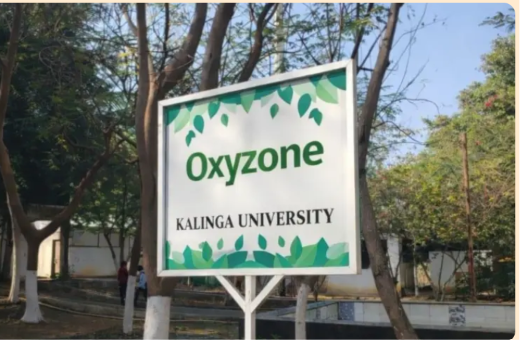

Oxyzone - a green space in the CampusFish Aquarium
The technologies to identify environmental vulnerabilityKalinga University promotes the development and application of environmentally responsible technologies aimed at reducing pollution and protecting aquatic ecosystems. Faculty members and students undertake interdisciplinary research and practical initiatives related to wastewater treatment, water purification, bioremediation, pollution monitoring and sustainable water management. These efforts focus on reducing the release of pollutants into aquatic environments and improving the quality of water resources. Through academic projects, laboratory-based research, field-based studies and awareness initiatives, contributes to strengthening sustainable water management practices and reducing pressures on freshwater and aquatic ecosystems. These activities support the conservation of aquatic biodiversity, improvement of water quality and development of environmentally sustainable solutions for aquatic ecosystem protection.

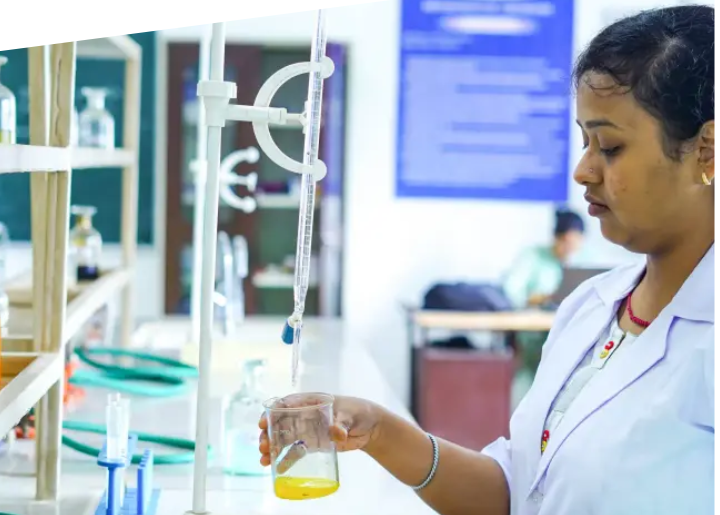
Kalinga University promotes water-sensitive waste disposal practices to minimize pollution and protect aquatic ecosystems. The University emphasizes proper segregation and responsible management of solid, liquid and laboratory waste to prevent contamination of surface and groundwater resources. Wastewater generated from campus facilities is appropriately treated before discharge or reuse, in accordance with applicable environmental standards.
The University encourages recycling, reuse and reduction of single-use plastics through awareness programmes for students and staff. Proper handling of chemicals, prevention of contaminated runoff and environmentally responsible cleaning practices are promoted across the campus. These measures contribute to responsible waste management, water conservation and the protection of aquatic ecosystems.
Guidelines for Water Discharge Management
Effective Year: 2025
Kalinga University is committed to managing wastewater responsibly to protect water quality, aquatic ecosystems, wildlife and human health. These guidelines apply to wastewater generated from academic facilities, laboratories, hostels, canteens, offices and other university premises.
Key Guidelines
Responsibility
The University Administration, Environmental Sustainability Committee and concerned maintenance/engineering departments shall oversee implementation, monitoring and periodic review of these guidelines.
Action Plan for Reducing Plastic Waste
Kalinga University is committed to reducing plastic waste and promoting a cleaner and environmentally sustainable campus. The University shall implement the following measures:
Responsibility: University Administration, Environmental Sustainability Committee and concerned housekeeping/waste-management teams.


Initiations for Reducing Plastic Waste

Initiations for Reducing Plastic Waste
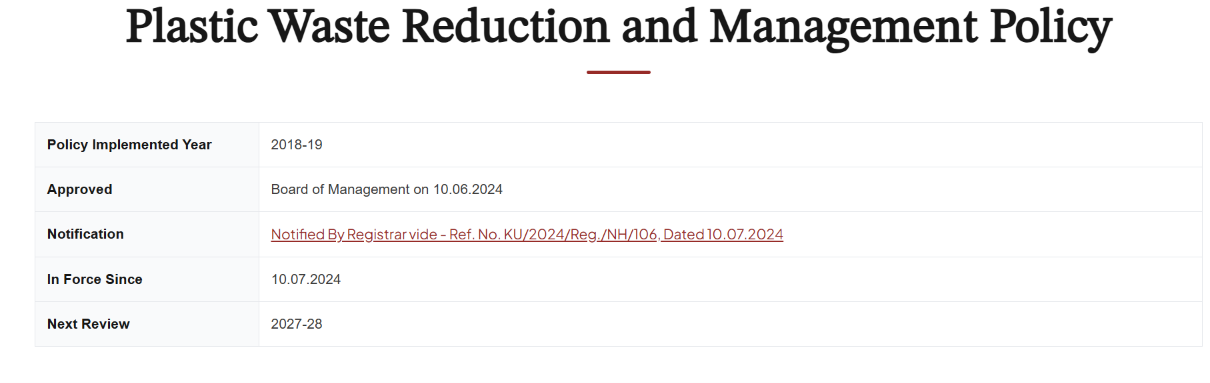
Policy related to plastic waste reduction:


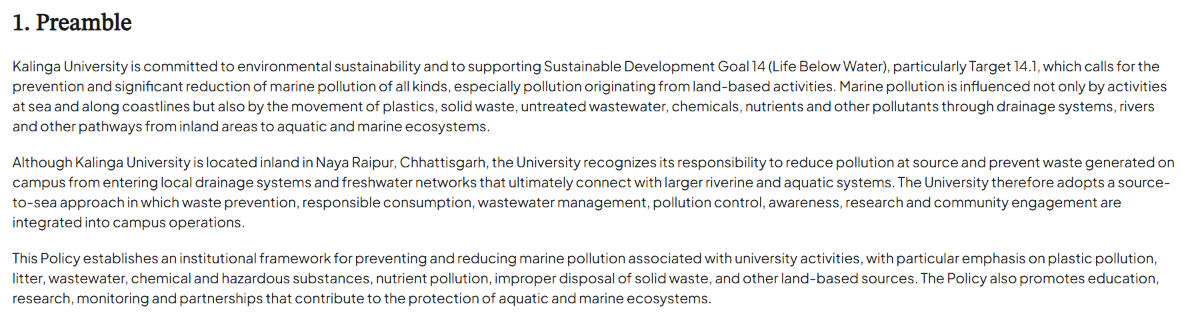


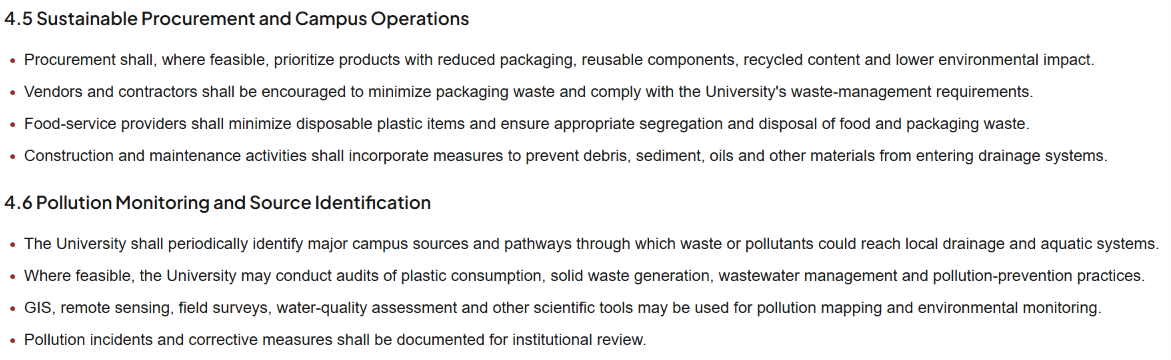


Kalinga University is committed to conserving and enhancing local ecosystems through environmental education, research, campus sustainability initiatives and community engagement. The University promotes biodiversity conservation, responsible management of soil and water resources, green campus practices and sustainable use of natural resources. Faculty and students participate in activities related to plantation, water conservation, waste management and environmental awareness, contributing to healthier and more resilient local ecosystems. Through academic initiatives and community outreach, the University continues to encourage responsible environmental stewardship and sustainable resource management.


Plan for Minimizing Alteration of Aquatic Ecosystems
Kalinga University is committed to minimizing adverse impacts on aquatic ecosystems through responsible water management, pollution prevention, biodiversity conservation and sustainable campus development. The University shall implement the following measures:
Key Actions
Responsibility
The University Administration, Environmental Sustainability Committee and relevant academic, engineering and maintenance departments shall coordinate implementation and monitoring of this plan.
Event- World Wetland Day 2026 Celebration
Date: 03/02/2026
Time of event: 10:00 AM onwards
Mode of event: offline
Venue: Nandanvan Jungle Safari, Naya Raipur
No. of Participants: 85 students and 4 faculty members
Programme Objective: To raise awareness about the importance of wetlands in maintaining ecological balance, conserving biodiversity, and supporting sustainable livelihoods. The programme aimed to promote wetland and wildlife conservation, highlight the role of traditional knowledge and conservation practices in protecting wetland ecosystems, and provide students with practical experience through safaris and interactive sessions while encouraging the participation of both local and international students.
Programme Description: The Department of Zoology and the Green Club of Kalinga University, in collaboration with Nandanvan Jungle Safari and the Chhattisgarh Forest & Climate Change Department, organized an educational visit and safari programme to observe World Wetlands Day 2026. The event featured an informative ranger interaction and awareness session conducted by Mr. Vijay Patil (Forest Ranger) and supported by Mr. Upendra Sahu (Forest Department Member). This session highlighted the ecological importance of wetlands, wildlife conservation, and biodiversity management. A total of 85 students (including 24 African students) participated, enjoying a jungle safari where they observed diverse wildlife in their natural habitats and compared Indian fauna with ecosystems from their home countries. The event successfully fostered multicultural learning and environmental responsibility, concluding with a vote of thanks by Dr. Manoj Singh.
Coordinator(s): Dr. Manoj Singh (Head of the Department of Zoology & Green Club Coordinator) and Dr. Ajay Kumar Harit (Associate Professor & Green Club Coordinator), Department of Zoology & Green Club, Kalinga University

Event on World Wetland Day
Kalinga University actively promotes the monitoring and conservation of aquatic ecosystems through field studies, academic research and student-led environmental initiatives. Periodic assessment of water-quality parameters such as pH, TDS, turbidity and other relevant indicators helps in understanding the condition of local water resources. Faculty and students also undertake studies related to aquatic biodiversity, pollution sources and human impacts on freshwater ecosystems. These efforts support informed conservation practices, sustainable management of water resources and the long-term protection of aquatic ecosystem health.
Kalinga University promotes aquatic stewardship through ongoing awareness, water conservation and environmental programmes involving students, faculty and local communities. Activities include water-quality awareness, responsible water use, aquatic ecosystem conservation, waste reduction and field-based environmental studies. Students and faculty participate in monitoring and awareness activities that encourage protection of freshwater resources and responsible management of aquatic environments. These programmes strengthen environmental awareness, community participation and sustainable water-management practices across and around the University.
Event: World River Day Celebration
Location: New Building, Kalinga University, Naya Raipur, Chhattisgarh
Date of the Event: 24 September 2025
No. of Participants: 37 NCC cadets participated in the programme.
Programme Objective:
To create awareness among students about river conservation, cleanliness, and the ecological, cultural, and economic importance of rivers. The programme aimed to sensitize cadets towards river pollution, promote sustainable water-resource management, and encourage responsibility for protecting rivers and aquatic ecosystems.
Programme Description:
The NCC Army Wing of Kalinga University organized World River Day under the Puneet Sagar Abhiyan and the theme “#Hamari Nadiya – Hamari Zimmedari (Cleaning & Protecting Rivers – Cradle of Civilization & Lifeline)”. The offline programme included a poster-making and awareness drive through which 37 cadets promoted messages on river cleanliness, water conservation, pollution control, and environmental sustainability. The activity encouraged teamwork, creativity, environmental stewardship, and youth participation in river and aquatic ecosystem conservation. The programme was aligned with SDGs 6, 13, 14, and 15.Coordinator(s):
Lt. Vibha Chandrakar, Assistant Professor, FD Department; In-charge, DSW; ANO, NCC Army Wing.
Kalinga University encourages collaboration with local communities and relevant institutions for the conservation and sustainable management of shared aquatic ecosystems. Faculty and students participate in awareness, water conservation, water-quality assessment and environmental activities involving local stakeholders. These collaborative efforts promote community participation in protecting nearby ponds, wetlands and other freshwater resources, while supporting pollution prevention, biodiversity conservation and responsible use of shared aquatic ecosystems.
Kalinga University follows an integrated approach to watershed management with emphasis on conservation, efficient water use and protection of local water resources.
Key Strategies: